Top 10 Best Oil Drilling Equipment for Efficient Operations?
In the competitive field of oil drilling, efficiency is paramount. Selecting the right Oil Drilling Equipment can greatly influence operational success. This equipment varies from drills, pumps, to safety gear, all playing critical roles in the energy extraction process. High-quality gear can enhance performance, yet choosing the best options often proves challenging for operators and procurement teams.
The right equipment should not only boost productivity but also meet specific industry standards. Features like safety certifications, reliability, and advanced technology are essential. However, many buyers overlook the importance of supplier qualifications, which can lead to future operational issues.
Moreover, the advent of artificial intelligence in procurement processes enhances decision-making. Smart navigation tools help identify qualified suppliers, simplifying the selection process. This innovation reflects a shift in the industry, yet not all operators fully utilize these advances. Balancing tradition with technology remains a critical reflection point for oil drilling companies striving for greater efficiency.

Overview of Oil Drilling Equipment and Their Importance in Operations
Oil drilling equipment plays a crucial role in the energy industry. Efficient operations depend on reliable tools and machinery. Drilling rigs are essential for reaching oil reservoirs buried deep underground. They come in various types, each catering to specific conditions. Understanding these differences is vital for operational success.
Various components make up drilling equipment. Drill bits, for instance, vary in size and design. They impact the drilling speed and efficiency significantly. Mud pumps are another important aspect. They circulate drilling fluid, cooling the drill bit and removing cuttings. Poorly functioning pumps can lead to delays and increased costs.
Moreover, safety equipment should not be overlooked. Monitoring systems help ensure that the operations stay safe and on track. Training personnel to use equipment effectively is equally important. After all, even the best machinery can fail in inexperienced hands. Regular maintenance checks are necessary but often neglected. Ignoring wear and tear can result in tragedies and financial losses. A commitment to thorough procedures can improve both safety and efficiency.
Top 10 Best Oil Drilling Equipment for Efficient Operations
| Equipment |
Type |
Function |
Efficiency Rating |
Maintenance Level |
| Rotary Drilling Rig |
Drilling Equipment |
Drilling boreholes |
High |
Moderate |
| Mud Pump |
Circulation Equipment |
Pumping drilling fluids |
Very High |
Low |
| Blowout Preventer |
Safety Equipment |
Preventing blowouts |
High |
High |
| Drill Bit |
Cutting Tool |
Cutting rock formations |
Medium |
Low |
| Casing |
Support Structure |
Stabilizing well |
High |
Medium |
| Wellhead |
Production Equipment |
Controlling well pressure |
High |
Low |
| Separator |
Processing Equipment |
Separating oil, gas, and water |
Very High |
Medium |
| Storage Tanks |
Storage Equipment |
Storing extracted resources |
High |
Low |
| Pipeline |
Transport Equipment |
Transporting oil and gas |
High |
Medium |
| Cable Tool Rig |
Drilling Alternative |
Drilling in soft formations |
Medium |
High |
Top 10 Oil Drilling Equipment for Enhanced Efficiency and Safety
Oil drilling equipment plays a critical role in enhancing operational efficiency and safety. According to a recent industry report, up to 70% of drilling costs are affected by equipment performance. Advanced technologies, such as rotary drilling systems and automated drilling rigs, have shown significant improvements. These systems can reduce drilling time by as much as 30%. Automation not only minimizes human error but also enhances safety on the rig.
However, challenges remain. For instance, older drilling equipment often struggles with reliability. In a survey, 45% of operators reported equipment failures that led to production delays. Regular maintenance and upgrades are essential. Also, some operators are not fully utilizing data analytics in drilling. Integrating real-time data monitoring can optimize performance but requires investment.
Furthermore, the choice of drilling bits can impact efficiency. Studies show that using the right bit can improve penetration rates by 20%. Yet, many operators overlook this aspect, sticking to outdated methods. Emphasizing training on equipment use is fundamental. Workers who are well-trained in current technology tend to be safer and more efficient.
Top 10 Best Oil Drilling Equipment for Enhanced Efficiency and Safety
This chart displays the efficiency ratings of the top 10 pieces of oil drilling equipment. A higher rating indicates better performance and reliability in drilling operations.
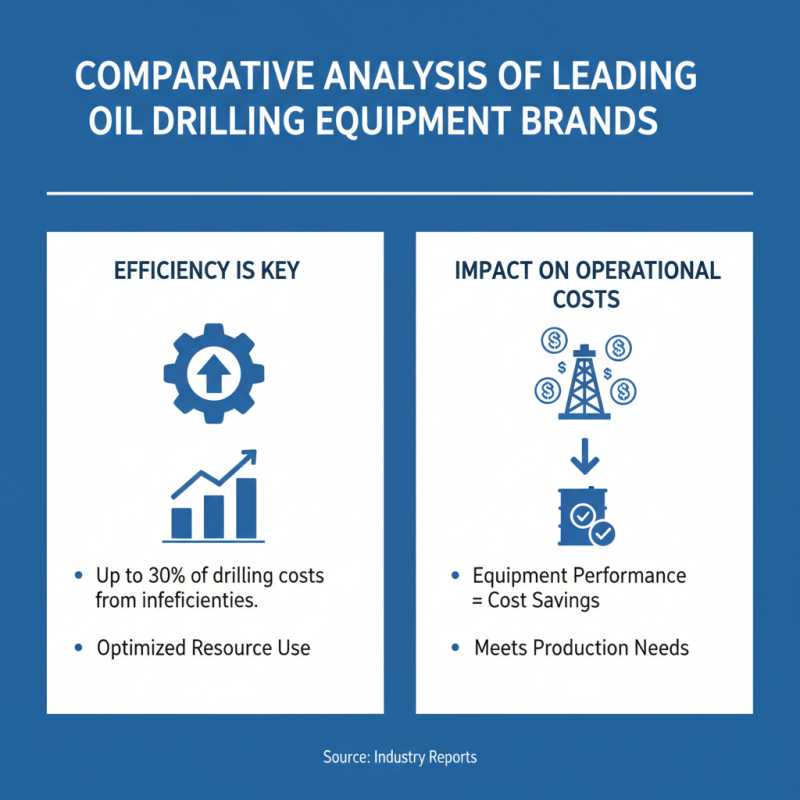
Comparative Analysis of Leading Oil Drilling Equipment Brands
When analyzing oil drilling equipment, efficiency is key. Industry reports suggest that the performance of equipment can influence operational costs significantly. For instance, data indicates that up to 30% of drilling expenditures can arise from equipment inefficiencies. This highlights the importance of selecting equipment that not only meets production needs but optimizes resource use.
The leading brands in the oil drilling sector typically showcase a range of technologies. Many utilize advanced materials and innovative designs aimed at enhancing durability. However, some brands still struggle with reliability. Maintenance issues often plague older models, leading to downtime that costs operators millions. Recent statistics show that equipment failure can lead to an additional 15% in project costs.
Each piece of equipment has its pros and cons. Rotating systems, for example, may yield high torque but may require frequent servicing. This can offset their advantages. Furthermore, newer technologies often come with a steep learning curve. Teams need thorough training to maximize efficiency. Based on analysis, operators should weigh benefits against potential drawbacks in their specific operational context.
Future Trends in Oil Drilling Technology and Equipment Innovations
The future of oil drilling technology looks promising. Innovations are emerging rapidly.
Automation and AI are changing the landscape. These technologies can enhance efficiency and help in reducing human error.
However, the transition can be challenging.
New drilling equipment is becoming more efficient. Technologies like advanced sensors and
real-time data analytics are on the rise. They improve decision-making during drilling operations.
The concern here is the cost. Small companies may find it tough to adopt these innovations.
Sustainability is another growing trend. Environmentally friendly methods are increasingly critical. Many operators want to minimize ecological impact.
Yet, the balance between efficiency and sustainability needs careful thought.
It's vital to explore new frontiers while ensuring responsible practices.