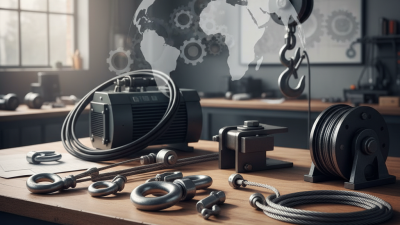
China Top Rig Accessories for Enhanced Performance and Efficiency?
In the competitive world of drilling, enhancing performance and efficiency is paramount. Rig accessories play a crucial role in this mission. As noted by Dr. Emily Zhang, a leading expert in rig technology, "Innovative rig accessories can drastically improve drilling outcomes." This statement underscores the importance of selecting the right tools for optimal performance.
Many companies prioritize these accessories to streamline operations. They often overlook the impact of quality rig accessories. Low-quality parts can lead to inefficiencies. In contrast, superior accessories offer reliability and better performance. Providers must focus on durability and compatibility to meet industry demands. The challenge lies in balancing cost and quality, which requires thoughtful consideration.
Relying solely on traditional practices can hinder progress in the rig accessories sector. Exploring new technologies and materials is essential. This reflects a shift in mindset, where innovation is embraced over convention. Fostering an environment that encourages experimentation can lead to breakthroughs. Yet, it’s crucial to continually assess these changes for real-world applicability. Only then can the true potential of rig accessories be realized.

Top Considerations for Selecting Rig Accessories in China
When selecting rig accessories in China, various factors need careful consideration. High-performance accessories enhance operational efficiency and reduce downtime. The drilling industry reports that efficient accessories can boost productivity by up to 30%. This is crucial, especially in competitive markets where every minute counts.
Quality and durability are paramount. Many operators fail to assess the long-term performance of products. A report by Offshore Technology states that nearly 20% of rig failures are linked to subpar accessories. Selecting reliable suppliers can mitigate risks. It's essential to evaluate each accessory's specifications, material quality, and real-world performance.
Tips: Always request samples for testing before making bulk purchases. Verify supplier credentials to ensure their reliability. Regularly review and update your accessory inventory to maintain peak performance. Don't underestimate the importance of well-maintained accessories; they can significantly extend the lifespan of your rig.
China Top Rig Accessories for Enhanced Performance and Efficiency
| Accessory Type |
Material |
Weight (kg) |
Load Capacity (t) |
Compatibility |
| Drill Bit |
High Carbon Steel |
5.6 |
30 |
Universal |
| Rig Hook |
Alloy Steel |
3.2 |
50 |
Standard Rigs |
| Mud Pump |
Cast Iron |
23.5 |
20 |
Rotary Drilling |
| BOP (Blowout Preventer) |
Stainless Steel |
45.0 |
100 |
Blowout Control Systems |
| Casing Shoe |
Composite Material |
2.0 |
10 |
Standard Sizes |
Impact of Material Quality on Rig Accessory Efficiency
The efficiency of rig accessories largely depends on the material quality used in their production. High-quality materials enhance durability and performance. Inferior materials can lead to frequent failures and increased downtime, impacting overall productivity. Workers often face challenges when using substandard accessories, which can harm safety and productivity.
Different materials exhibit varied properties. Steel is preferred for its strength, while lightweight composites offer flexibility and corrosion resistance. However, using the wrong material can result in unexpected issues. Accessories made from low-grade components may wear out quickly, leading to costly replacements. It's essential to consider material selection carefully. Industry experts recommend regular assessments of accessory performance and quality.
Improving accessory effectiveness involves understanding material properties and their importance. Quality assurance plays a crucial role in production. Many businesses overlook this step, leading to significant variability in performance. Regular training and updates on material advancements can help teams make informed decisions. Assessing material quality is an often neglected but vital part of ensuring accessory efficiency.
Industry Standards and Regulations Governing Rig Accessories in China
In China, the rig accessories industry operates under strict guidelines. These regulations ensure safety and performance standards are met. Compliance with these standards is crucial for manufacturers and suppliers. It helps in maintaining the quality of rig accessories used in various applications.
The process of certification can often feel cumbersome. Manufacturers must navigate intricate requirements. This sometimes leads to delays in production and delivery. Yet, adherence is vital for avoiding accidents and ensuring operational efficiency. Rig accessories must endure harsh conditions. Rigorous testing is essential to safeguard equipment and personnel.
Industry experts emphasize the importance of continual learning. Companies must stay updated on regulations and best practices. There's a sense of urgency to adapt to newer technologies while complying with existing norms. Balancing innovation with compliance can be challenging. However, ignoring industry standards can lead to significant setbacks.
Innovative Technologies Enhancing Rig Accessory Performance
Innovative technologies are transforming rig accessories, enhancing performance and efficiency in drilling operations. For instance, advanced materials are now being used, which can withstand extreme conditions. These materials improve the durability of rig components, leading to less downtime. A recent industry report indicates that advanced materials can extend the lifespan of rig accessories by up to 30%. This reduction in replacement frequency can significantly decrease operational costs.
Moreover, automation technologies are changing how rig accessories function. Robots and AI are increasingly integrated into rig operations. They monitor equipment health in real time, predicting potential failures before they occur. This proactive approach reduces unexpected downtime and enhances overall efficiency. Industry data shows that integrating automation can improve efficiency by over 25%. However, the reliance on technology raises concerns about data security and the need for skilled technicians.
Additionally, the focus on energy efficiency is driving innovation in rig accessories. Improved power management systems can optimize energy consumption, leading to lower operational costs. However, transitioning to these new systems requires investment and training. Organizations must consider the balance between initial costs and long-term savings. Ensuring compatibility with existing equipment can also be challenging, highlighting the complexities of adopting innovative technologies in this competitive sector.
Cost-Benefit Analysis of Upgrading Rig Accessories for Increased Output
Upgrading rig accessories offers significant potential for enhancing performance and efficiency. Research indicates that replacing older components can boost overall output by as much as 30%. Many operators overlook the long-term benefits of these upgrades, focusing instead on immediate costs. A recent industry report highlights that a modest investment in improved accessories can yield a return on investment (ROI) exceeding 150% within the first year of implementation.
However, not all upgrades guarantee success. Some accessory replacements may lead to compatibility issues or require additional modifications. In a survey of 500 companies, 40% reported challenges integrating new accessories with existing systems. This underscores the importance of thorough risk assessments before making any changes. Surprisingly, inefficiencies in the supply chain can undo the benefits of upgraded equipment.
Rig operators must consider the full picture. Assessing the lifetime costs of accessories is crucial. The initial price can be deceptive. Lower-quality accessories may lead to increased maintenance costs and downtime, wiping out projected savings. A detailed analysis of maintenance records typically reveals that over 60% of unplanned outages stem from accessory failures. Hence, the decision to upgrade should involve careful evaluation of both performance gains and potential pitfalls.