How to Choose the Right Well Drilling Machine for Your Needs?
Choosing the right Well Drilling Machine can be daunting. It's a crucial decision that affects efficiency and costs. As industry expert John Smith says, “Investing in the right machine can save you time and money in the long run.” Understanding your specific needs is key.
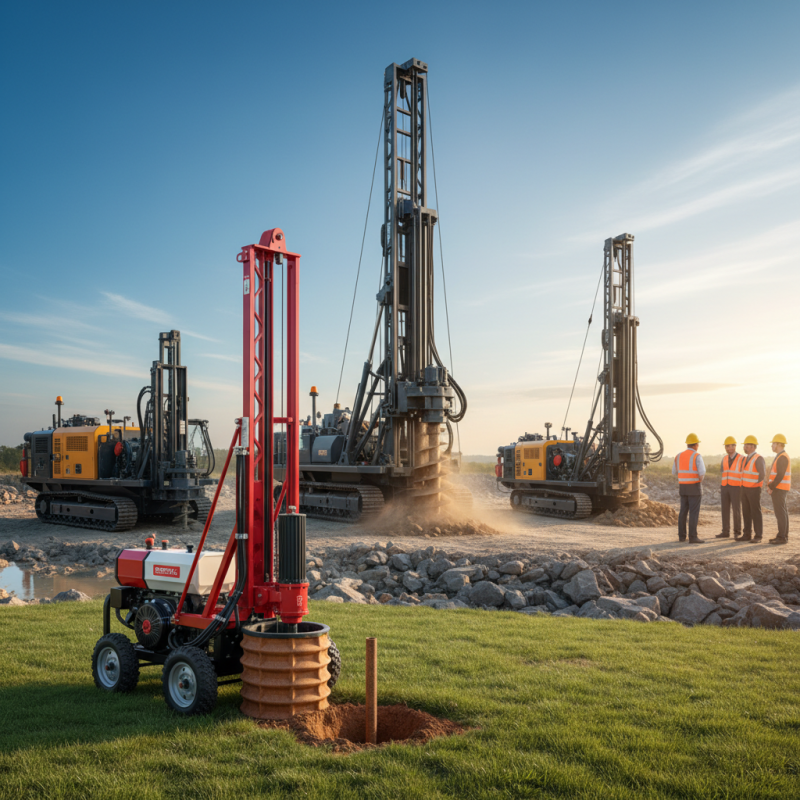
Different projects require different types of machines. For instance, residential drilling is not the same as commercial projects. A compact Well Drilling Machine may suffice for small residential tasks, but larger operations require heavy-duty equipment.
Consider the terrain and water table depth. This affects the type of machine you'll need. Machinery that excels in rocky soils might struggle in soft terrains. Reflect on these details; they can lead to costly mistakes. Selecting the ideal Well Drilling Machine is more than just a purchase; it’s an investment in your project’s future.
Factors to Consider When Selecting a Well Drilling Machine
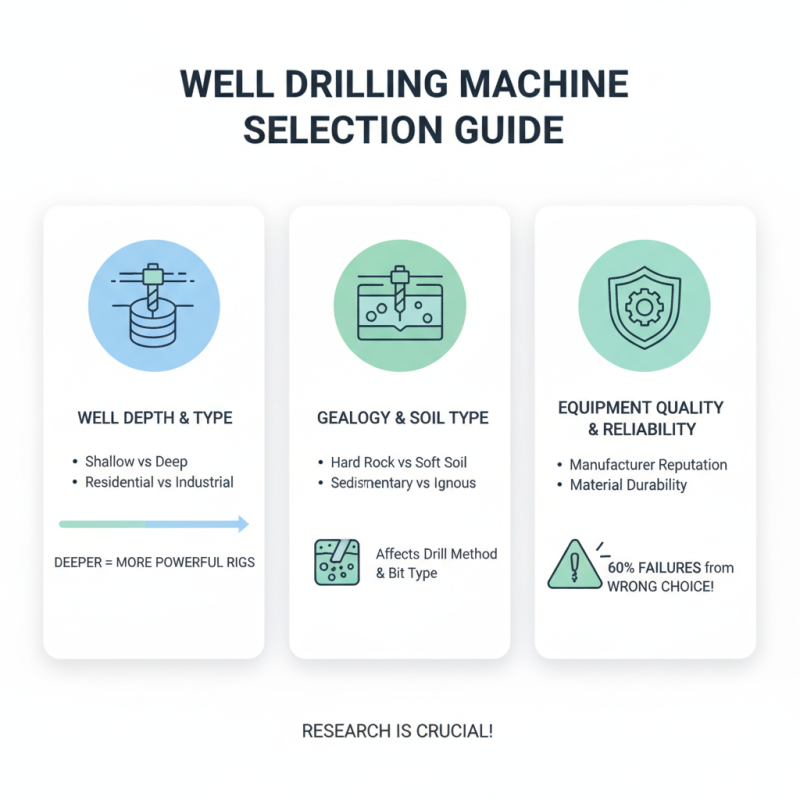
Choosing the right well drilling machine requires thorough consideration of several factors. The depth and type of the well largely dictate the equipment needed. For instance, deeper wells may require more powerful rigs. According to a industry report, around 60% of well-drilling failures result from inadequate equipment choice. This emphasizes the need for thorough research.
Understand your specific requirements. Consider the geological conditions. Different soil types demand varied drilling techniques. For instance, rocky terrains may require a rotary drill, while softer grounds can use cable tool drilling. The 2021 market analysis indicates that over 70% of drilling inefficiencies stem from mismatched machinery. Factors such as budget, maintenance costs, and the availability of parts also play a critical role.
Do not underestimate the importance of operator skill. An experienced operator can make a significant difference. They understand how to maximize efficiency with complex machinery. However, hiring skilled labor can inflate costs. Balancing quality and budget is vital. As the industry evolves, machine specs are also improving, so staying updated on innovations is necessary.
Types of Well Drilling Machines Available in the Market
When considering well drilling machines, it’s essential to understand the types available in the market. Broadly, there are two main categories: rotary and percussion drilling machines. Rotary machines are popular for their efficiency and ability to drill deep. According to industry reports, rotary machines account for nearly 70% of the market due to their effective drilling speed.
In contrast, percussion drilling machines operate differently. They use a hammering motion to penetrate tough surfaces. These machines are preferred for shallow depths. After evaluating data, it’s clear that percussion machines make up about 30% of the overall market share. This indicates a niche but crucial role in specific drilling scenarios.
Decision-makers often overlook some variables. For instance, the terrain can significantly affect performance. A machine's weight and size may limit mobility on uneven ground. Additionally, maintenance needs can vary widely between models. Buyers should weigh these factors carefully. It's not always about the initial cost. Overall, selecting the right machine involves assessing both technical specifications and real-world applications.
Evaluating Your Site Conditions for Drilling Equipment Choice
Evaluating site conditions is crucial for selecting the right well drilling machine. Terrain type can heavily influence your choice. For example, rocky ground may require a more robust drill. According to a report by the National Ground Water Association, nearly 30% of unsuccessful drilling attempts are due to improper equipment selection based on the site conditions.
The depth of the water table is another key factor. A shallower water table typically requires a simpler, smaller machine. Meanwhile, deeper wells may demand advanced drilling rigs with higher torque and greater stability. An analysis by the U.S. Geological Survey emphasizes that understanding geology can save time and money.
Soil composition should not be overlooked either. Sand, clay, or gravel can affect drilling efficiency. Some reports indicate that incorrect evaluations can increase drilling time by up to 40%. It’s wise to conduct thorough site assessments. This will help avoid investing in expensive gear that may not meet your needs. Some might overlook these details, leading to frustration down the road. Always re-evaluate your site conditions to ensure the best equipment choice.
Budgeting and Cost Analysis for Well Drilling Machines
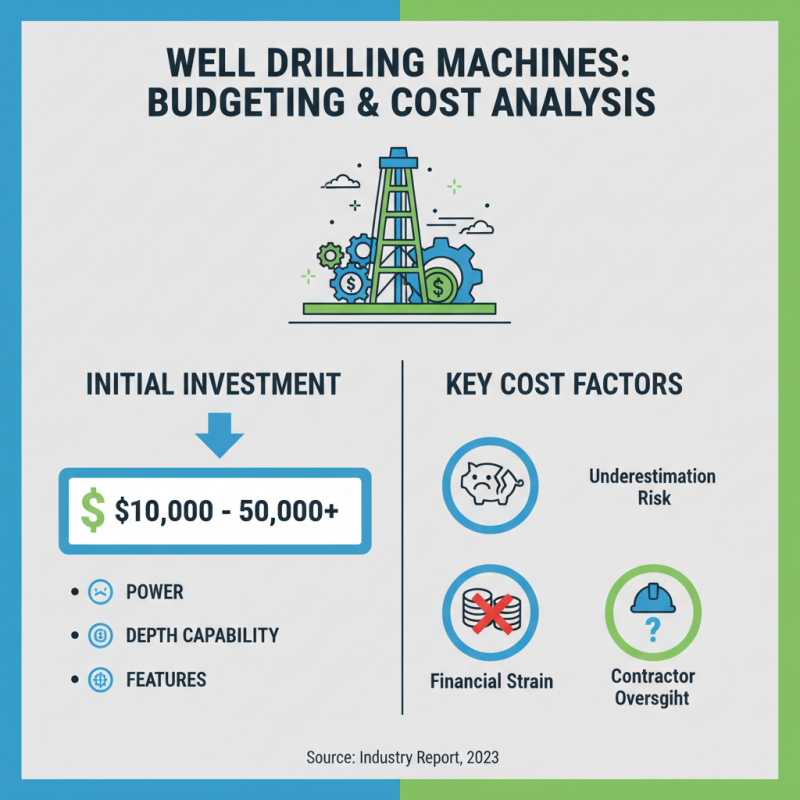
When budgeting for well drilling machines, it’s crucial to consider various cost factors. The initial investment typically ranges from $10,000 to $50,000. Prices vary based on power, depth capability, and features. Many contractors underestimate this range, leading to financial strain.
Maintenance costs can also add up. Routine checks and part replacements may require an additional 10% of the initial cost annually. This is a common oversight. Failing to include these costs in the budget can derail projects. Additionally, take into account labor expenses. Skilled operators may command high wages, with rates averaging $25 to $50 per hour in the industry.
Understanding the long-term implications of the purchase is important. A cheaper machine might save money upfront but can lead to higher operational costs. Reports indicate that well-integrated systems can improve efficiency by 20% over time. However, up to 30% of users report dissatisfaction due to unplanned expenses. Thoughtful budgeting begins with recognizing these nuances.
Maintenance and Support Considerations for Drilling Equipment
When selecting a well drilling machine, maintenance and support are crucial. Keeping the equipment in top shape extends its lifespan. Regular maintenance checks help identify issues before they escalate. Simple tasks, like changing fluids or checking filters, are often overlooked. These steps can save significant costs down the line.
Support is another vital aspect. Access to knowledgeable technicians can make a difference. When a problem arises, having someone to call is essential. Many users find themselves stuck due to lack of support. Sometimes, manuals lack clarity, leading to confusion. Investing in machines with excellent customer service can ease this burden.
Choosing the right well drilling machine includes considering long-term costs and upkeep. You might get drawn to a low initial price. However, high maintenance costs could reflect a poor choice. Reflecting on these factors ensures effective operation in the long run. Understanding the balance between purchase price and future expenses is important.