How to Choose the Right Rope Block Sheaves for Your Needs?
When selecting the right Rope Block Sheaves, it's essential to understand your specific needs. Rope Block Sheaves are vital components in various applications, from sailing to heavy lifting. The right choice can enhance efficiency and safety.
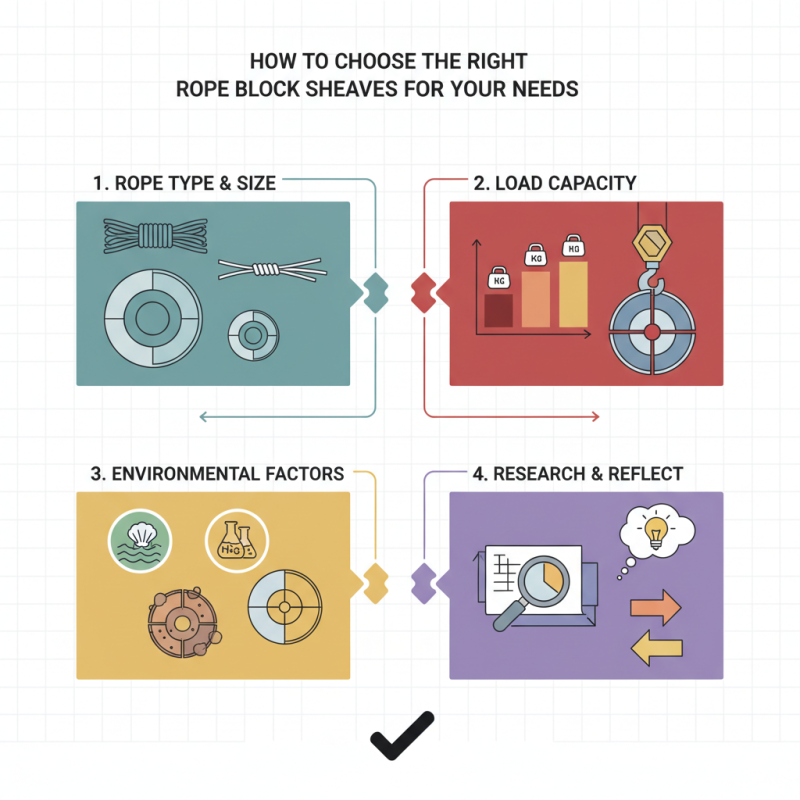
Consider the type of rope you plan to use. Different ropes require different sheave materials and sizes. For example, a larger sheave can reduce wear on the rope but may not fit in tighter spaces. Consider the load capacity and the environment as well. Saltwater or chemicals can affect the durability of certain sheaves.
It's necessary to evaluate your options carefully. Sometimes, you may realize that you need to go back to the drawing board. Don't rush — take your time to research and reflect. The perfect fit could make all the difference in your project’s success.
Understanding the Purpose of Rope Block Sheaves in Rigging Systems
Rope block sheaves play a critical role in rigging systems. They guide the rope smoothly and reduce friction during operation. Without proper sheaves, the entire setup can fail. It’s crucial to understand what sheaves do before making a selection.
Choosing the right sheave involves considering size and material. A sheave that is too small can wear down the rope quickly. Conversely, one that is too large can lead to instability. Different materials offer various advantages. For example, heavier materials may provide durability, while lighter ones enhance mobility. Testing a few options can reveal the best fit for specific tasks.
Often, users overlook the maintenance of sheaves. Dust and debris can build up, causing performance issues. Regular inspection helps avoid costly mistakes down the line. Assessing the sheave’s condition periodically keeps the rigging system efficient. A little extra effort in maintaining sheaves makes a significant difference.
How to Choose the Right Rope Block Sheaves for Your Needs? - Understanding the Purpose of Rope Block Sheaves in Rigging Systems
| Sheave Material |
Sheave Diameter (inches) |
Load Capacity (lbs) |
Bearing Type |
Weight (lbs) |
| Aluminum |
4 |
1000 |
Bronze |
2.5 |
| Steel |
5 |
1500 |
Ball |
3.2 |
| Plastic |
3 |
500 |
Sleeve |
1.8 |
| Composite |
6 |
1200 |
Roller |
2.7 |
| Nylon |
4.5 |
800 |
Plain |
2.1 |
Types of Rope Block Sheaves: Materials and Design Considerations
When selecting rope block sheaves, material and design are key considerations. Common materials include aluminum, stainless steel, and plastic.
Aluminum sheaves are lightweight yet durable, ideal for temporary setups. Stainless steel offers great strength but can be heavier. Plastic sheaves are lighter and prevent scratching but might not handle heavy loads well.
Design matters too. Sheave shape impacts efficiency. A deeper groove helps maintain rope alignment during use. Some designs have quick-release features, which can be useful. However, these can sometimes lead to accidental disengagement.
Reflecting on your needs is essential. What will you lift? What conditions will the sheaves face? These details shape your choice.
Striking the right balance between weight and strength is challenging. Avoid overemphasizing one aspect; consider every factor.
Selecting the Right Diameter for Sheaves Based on Rope Specifications
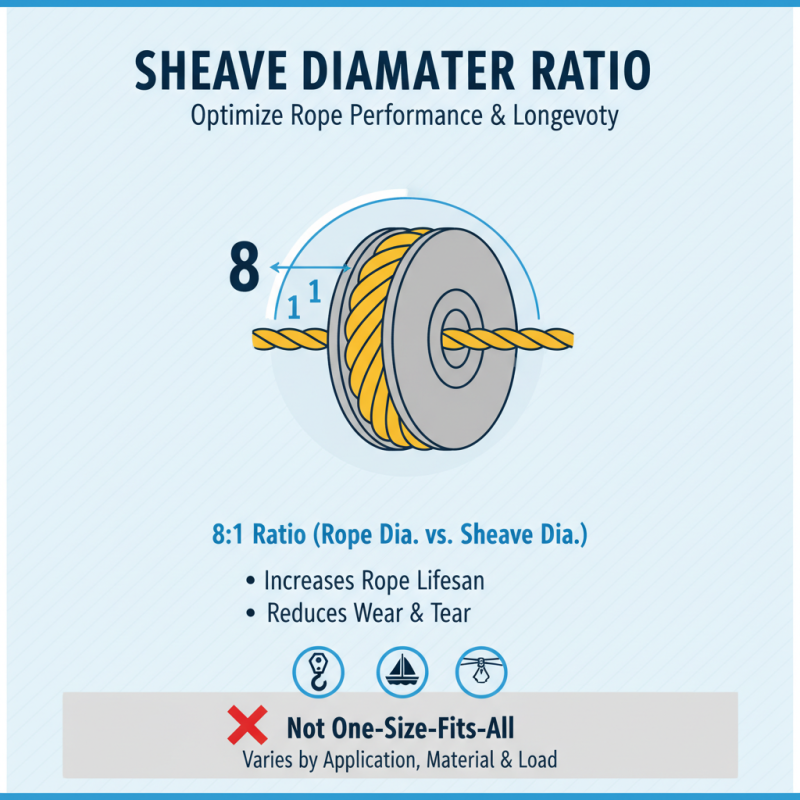
Choosing the right diameter for sheaves is crucial. It directly impacts the rope’s performance and longevity. Many professionals recommend matching the sheave diameter with the rope diameter. A commonly cited standard is a ratio of 8:1. This means if your rope is 1 inch, the sheave should be at least 8 inches in diameter. However, this ratio is not a one-size-fits-all solution.
Sometimes, users overlook the specific rope specifications. For instance, different materials have various flexibilities and strengths. A nylon rope behaves differently than a polyester one. A recent industry report showed that inappropriate sheave diameters could reduce rope life by up to 40%. This can lead to unnecessary costs. Many manufacturers suggest testing different sizes to find the best fit for specific applications.
Rope behavior changes due to wear and tear. Sheaves should ideally accommodate rope elongation and compression as well. Many users fail to consider these factors. Ignoring the right sheave diameter could compromise safety and efficiency. In a field report, around 30% of rope failures were linked to poor sheave choices. Therefore, careful selection is essential.
Load Capacity and Safety Factors in Choosing Sheave Components
When selecting rope block sheaves, load capacity and safety must be priorities. Each sheave has a rated load limit. It is vital to understand what this means. Exceeding this limit can lead to failures. Failing equipment can have serious consequences. Think about the environment where the sheave will be used. Harsh conditions can affect performance and safety.
Safety factors should also be considered. A safety factor indicates how much more load the sheave can handle beyond its rated capacity. A common safety factor is 5:1. This means that the sheave can withstand five times its rated load. However, you should not rely solely on these numbers. Each application is unique. Factors such as wear, environmental conditions, and usage frequency should be evaluated.
In some cases, you may need to reconsider your choice. For example, if you know the rope will be heavily used, consider a more robust option. Regularly inspect your sheaves for signs of wear. Small cracks or deformities can compromise safety. Choosing the wrong sheave might lead to costly repair work and unexpected downtime. Take time to assess all variables before making a decision.
Load Capacity of Different Sheave Sizes
Maintenance Practices to Enhance the Longevity of Rope Block Sheaves
Maintaining rope block sheaves is essential for optimal performance. Regular checks can prevent costly failures. Inspect the sheaves for any signs of wear or damage, such as cracks or chips. Even minor issues can lead to significant problems.
Cleaning the sheaves helps reduce friction and wear. Use a soft brush to remove debris. A clean sheave will operate more efficiently.
Lubrication is another crucial aspect. Apply a suitable lubricant to ensure smooth movement. Avoid over-lubricating, as it can attract dirt. However, lubricating too infrequently can cause wear. Replace worn sheaves promptly to avoid further damage. Remember, ignoring minor problems often leads to larger issues down the line. Regular maintenance allows for early detection of potential failures.
Take note of the operating environment too. Exposure to harsh elements can affect the sheaves' longevity. Consider storing them in a protected area when not in use. It may seem tedious, but these practices can save time and resources. Regular maintenance cultivates a proactive approach, requiring consistent attention and effort. Neglect will only lead to regret later on.