Top 10 Most Effective Drilling Mud Pumps for Your Projects?
In the complex world of drilling projects, the role of Drilling Mud Pumps cannot be overstated. These pumps are critical in maintaining optimal drilling fluid circulation. John Smith, a recognized expert in the field, once stated, "The right drilling mud pump can be the difference between success and failure in complex projects."
Choosing the most effective Drilling Mud Pumps can significantly enhance efficiency. Various models exist, each designed for specific drilling conditions and requirements. While the latest models boast advanced features, older pumps still hold their own. It’s essential to assess both the benefits and limitations of each type.
Determining the right pump involves more than just specifications. It requires understanding the project’s unique challenges. Too often, teams overlook critical factors, leading to costly errors. Not every pump fits every scenario. A misstep in selection can halt projects and inflate budgets. Embracing a thorough evaluation process is vital for success.
Overview of Drilling Mud Pumps and Their Importance in Projects
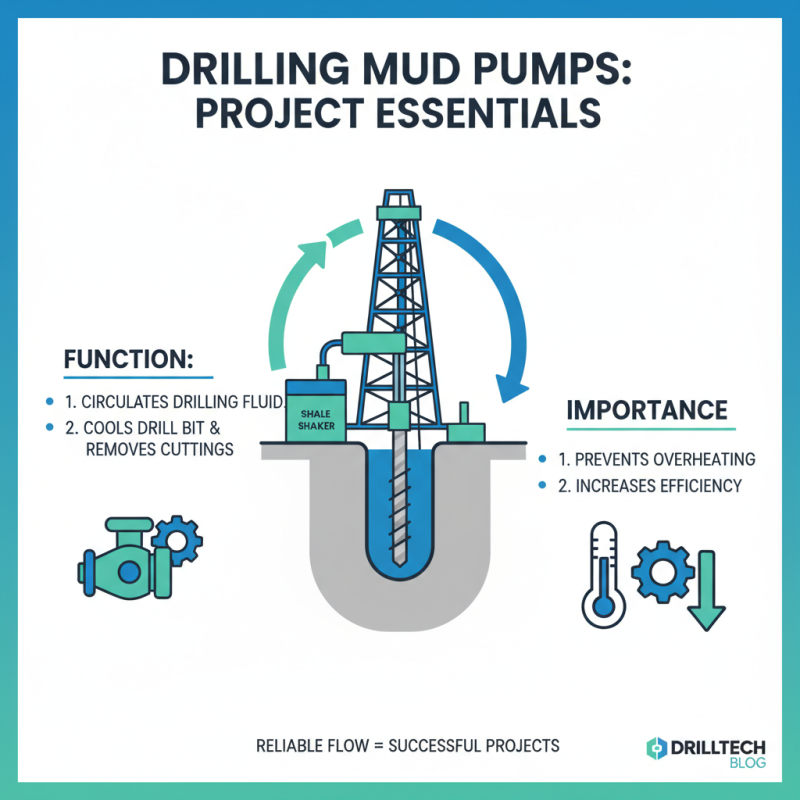
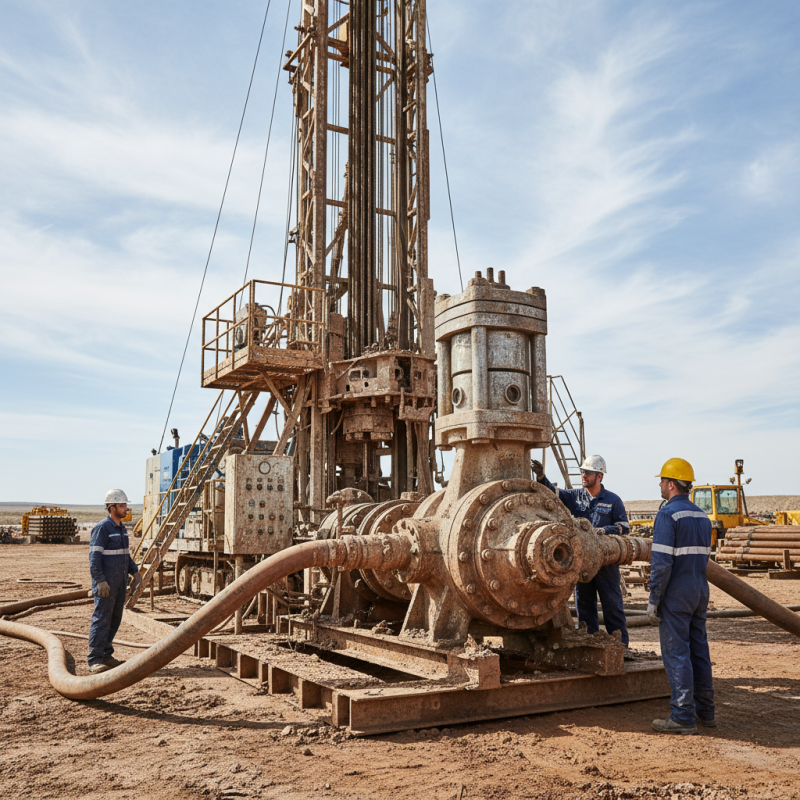
Drilling mud pumps play a crucial role in various drilling projects. These pumps circulate drilling fluid through the system. The fluid is essential for cooling the drill bit and removing cuttings. A reliable pump ensures a steady flow of this fluid. This process prevents overheating and increases efficiency.
Choosing the right mud pump is challenging. Many factors come into play, such as pressure and flow rate. Often, projects encounter unexpected issues. Pumps might not perform as expected, leading to delays. It's vital to assess each pump's capabilities carefully. Inadequate pumps can hinder a project’s progress.
Understanding the importance of these pumps can lead to better decisions. They affect not just drilling efficiency, but also safety. Effective mud circulation minimizes risks associated with blowouts. A well-functioning system can save both time and resources. However, overlooking details during selection can lead to costly mistakes. Always consider future needs and potential challenges when choosing equipment.
Criteria for Selecting the Most Effective Drilling Mud Pumps
Selecting the most effective drilling mud pumps requires careful consideration of several criteria. Efficiency is crucial. According to industry reports, pumps should achieve at least 90% efficiency at their optimal operating points. This metric directly impacts the performance of drilling projects, influencing both time and cost. Annual maintenance should also be factored in, as the cost of downtime can exceed that of the pump itself.
Another important aspect is flow rate. The right pump must match the specific requirements of the drilling operation. For instance, heavy-duty drilling may require pumps with flow rates exceeding 500 gallons per minute. Understanding the viscosity of the drilling mud is key, as it significantly affects pump selection. If the viscosity is too high, it can lead to pump damage.
Durability is a non-negotiable aspect. Not all pumps are built to withstand harsh environments. The materials used in construction should resist corrosion and abrasion. However, some manufacturers use materials that may not hold up over time. Users must critically assess the specifications and real-world performance reviews. While many pumps claim high durability, actual performance data often reveals discrepancies.
Top 10 Drilling Mud Pumps: Features and Specifications
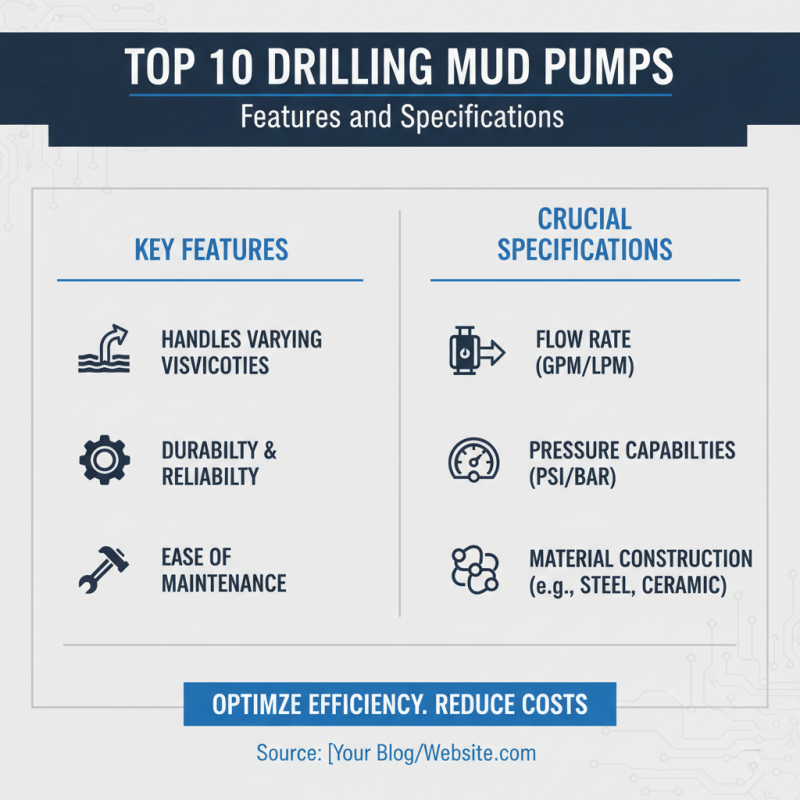
When selecting a drilling mud pump, specifications are crucial. Key features include flow rate, pressure capabilities, and material construction. Pumps should efficiently handle varying viscosities. Durability and maintenance requirements significantly affect project timelines. Consideration of these factors can save costs in the long run.
Each pump has unique strengths and weaknesses. Some may excel in high-pressure situations, while others are better for continuous operations. Noise levels and ease of use also play important roles. An ideal choice balances performance and practicality. Users often overlook the importance of serviceability, which can lead to operational delays.
Moreover, power consumption is a significant consideration. Energy-efficient pumps can lower operational costs. However, they might not always match higher performance models. It's essential to assess the project needs carefully before making a choice. Reflection on past experiences can guide better decisions in the future.
Comparative Analysis of Performance and Cost of Each Pump
When selecting the best drilling mud pump for various projects, performance and cost are critical factors. Recent industry reports indicate that a high-performance pump can improve efficiency by 20% to 30% during drilling operations. For example, pumps that deliver a consistent flow rate of 600 gallons per minute (GPM) significantly reduce the time spent on mud circulation. This factor can lead to lower operational costs and less downtime.
However, price does not always equal performance. Some budget-friendly options deliver similar performance metrics but may lack durability. A study found that pumps priced under $5,000 often have a shorter lifespan. Maintenance and operational costs can exceed initial savings, leading to reconsideration of choices. Buyers must carefully evaluate long-term expenses when selecting a pump.
Moreover, the efficiency of a pump is often affected by its design and build quality. Data suggests that certain designs lead to a 15% increase in wear resistance. Yet, this design efficiency usually comes at a higher price point. The challenge lies in balancing these factors—performance versus cost. Users can benefit from analyzing these metrics before making decisions. Identifying the right pump may require adjustments and reflections on prior choices, ultimately enhancing project outcomes.
Maintenance Tips for Ensuring Longevity of Drilling Mud Pumps
Maintaining drilling mud pumps is crucial for extended lifespan and efficient operation. Regular inspections should focus on key components such as seals, impellers, and motor connections. According to a study from the American Society of Mechanical Engineers, 30% of pump failures are due to inadequate maintenance. This statistic highlights how neglecting these areas can lead to costly downtimes.
Routine lubrication is essential. It reduces friction and heat buildup, improving performance. Industry standards suggest checking lubrication levels every 200 hours of operation. Additionally, clean filters can enhance pump efficiency significantly. Over time, dirt can clog the system, resulting in reduced flow rates.
Operators must also monitor pump vibrations. Excessive vibrations may indicate alignment issues or worn parts. The Vibration Institute recommends an immediate inspection if vibrations exceed a specific threshold. Ignoring these warning signs can lead to catastrophic failures. Being proactive can save time and resources in the long run. Regular audits of pump performance metrics can provide insights into potential problems before they escalate.
Top 10 Most Effective Drilling Mud Pumps for Your Projects
This chart displays the flow rate (in gallons per minute) of the top 10 most effective drilling mud pumps currently used in various projects. High flow rates are crucial for efficient drilling operations.