Top 10 Well Drilling Machine Types for Global Buyers
Choosing the right Well Drilling Machine is a practical decision, not a simple equipment purchase. Global buyers must compare geology, drilling depth, borehole diameter, water demand, transport access, and maintenance support. A compact crawler rig may work well on a narrow rural site. A powerful rotary machine may be necessary for hard rock, deep foundations, or demanding commercial projects.
Dr. John A. Driscoll, author of Groundwater and Wells, offers a valuable principle: “Well construction must match local geology and water needs.” That idea remains highly relevant. A machine with impressive horsepower can still perform poorly when its drilling method suits the wrong formation. Mud rotary, air rotary, down-the-hole hammer, cable tool, and sonic systems each have practical strengths. None is perfect.
Small details matter. Check mast stability, compressor capacity, torque, feed force, spare-part access, and operator training. Ask how the machine performs after years of dust, vibration, and irregular servicing. This is where many buying guides become too optimistic. A low purchase price may hide higher fuel use or difficult repairs. A premium model may exceed a small contractor’s real needs. Buyers should examine the complete operating picture before choosing.
This guide reviews the top ten Well Drilling Machine types for global buyers. It focuses on working conditions, machine capabilities, limitations, and realistic selection factors. The goal is not to promote one universal answer. There is no universal answer. Good equipment fits the ground, the project, and the people using it.
Well Drilling Machine Basics and Classification Standards
Top 10 Well Drilling Machine Types for Global Buyers
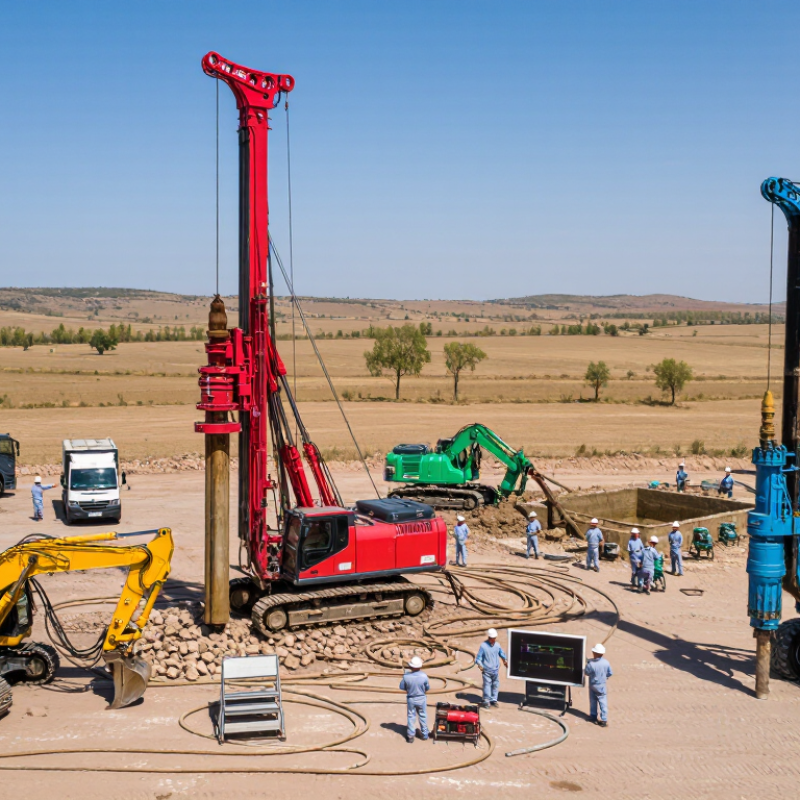
Well drilling machine basics begin with the drilling method. Rotary rigs use a rotating bit and circulating fluid to remove cuttings. Percussion rigs break rock through repeated vertical impact. Rotary-percussion models combine both actions for hard, fractured ground. Auger machines move loose soil with a helical screw. Air-core rigs use compressed air for shallow geological investigation. Each method suits different formations, depths, and water conditions.
Classification also depends on power source, mobility, and drilling capacity. Electric rigs fit sites with stable power and lower emissions requirements. Diesel-powered units offer independence in remote areas. Crawler-mounted machines travel across uneven ground, while truck-mounted rigs reduce relocation time. Trailer-mounted models can serve smaller projects with simpler access. Buyers should compare maximum depth, borehole diameter, torque, feed force, mast height, and pump capacity. These figures must match the intended casing and formation.
Field experience shows that brochure depth is rarely the whole story. A machine rated for 200 meters may perform poorly in abrasive rock or unstable sand. Soil samples, groundwater levels, access width, and local service skills deserve equal attention. A clean classification can still mislead. Even experienced teams sometimes choose excess capacity, increasing fuel use and transport costs. Certification, guarding, emergency controls, noise limits, and maintenance records should be checked against local requirements. Small details matter, such as bit changes beside a muddy borehole.
Top 10 Well Drilling Machine Types by Drilling Method
Top 10 Well Drilling Machine Types by Drilling Method
Global buyers should compare drilling methods before comparing machine size or horsepower. The ten common types include rotary mud, rotary air, down-the-hole hammer, top-hammer percussion, cable-tool, reverse-circulation, auger, sonic, core, and air-rotary systems. Rotary mud rigs use circulating fluid to stabilize deep boreholes. DTH rigs deliver impact energy directly at the bit. Top-hammer equipment suits fractured rock and shorter holes. Cable-tool machines are slower, but they remain practical for shallow formations and limited water access.
Auger rigs work efficiently in soft soil, while sonic rigs reduce wall collapse through high-frequency vibration. Reverse-circulation systems improve sample recovery in large-diameter drilling.
Core rigs target geological investigation rather than ordinary water wells. Air-rotary machines can drill quickly through competent rock, although dust control and compressor demand require careful planning.
The boundary is not always clean; many modern rigs combine rotary and percussion functions.
The UNESCO World Water Development Report 2022 states that groundwater supplies nearly half of global drinking water and about 40% of irrigated agriculture. That pressure makes method selection a reliability issue, not merely a purchasing preference. The USGS Estimated Use of Water in the United States, 2015, reported groundwater supplied 49% of U.S. public-supply withdrawals.
In field practice, geology decides more than catalog claims. A fast air rig may struggle in unstable sand. A slower mud rotary rig may deliver the better finished well. Noise, water availability, tooling cost, and operator experience also change the result. My own caution is simple: a “top ten” ranking can mislead when local formation data is missing.
Key Features, Applications, and Ground Conditions for Each Type
Top 10 Well Drilling Machine Types for Global Buyers
Rotary drilling rigs use rotating bits and hydraulic pressure for water wells, foundations, and mineral exploration. They perform well in clay, sand, and fractured rock. Auger rigs remove loose soil with helical flights and suit shallow, unconsolidated ground. Cable tool rigs repeatedly lift and drop a heavy bit. They are slow but dependable in hard formations. Mud rotary rigs circulate drilling fluid to cool the bit and stabilize weak boreholes. This method fits sand, gravel, and unstable sediments.
Air rotary rigs use compressed air to clear cuttings quickly in competent rock. Down-the-hole rigs place the hammer near the bit, improving penetration through hard, abrasive formations. Top-hammer rigs work efficiently in shallow rock, quarry faces, and construction sites, but may lose accuracy in deep holes. Reverse-circulation rigs carry cuttings through inner pipes and support large-diameter drilling. They are valuable in mineral exploration and loose formations. Sonic rigs vibrate the drill string, reducing friction and producing clean samples in mixed ground.
Jetting rigs inject water through small pipes and remain useful for low-cost, shallow wells in soft sand. Not for solid rock. Ground testing should guide every purchase. A powerful rig can still fail when groundwater, cobbles, or collapsing walls are underestimated. In field work, operators often balance torque, mast height, compressor capacity, transport limits, and local maintenance skills. Specifications look precise. Soil rarely behaves perfectly. Experienced buyers should verify penetration records, tooling compatibility, and safety controls under similar ground conditions.
Top 10 Well Drilling Machine Types for Global Buyers
Indicative typical drilling depth, applications, and suitable ground conditions by machine type.
| Machine Type |
Primary Applications |
Suitable Ground Conditions |
| Diamond Core Drill | Mineral exploration, geological investigation | Hard rock, fractured formations |
| Reverse Circulation Drill | Mining exploration, deep sampling | Hard rock, consolidated formations |
| Rotary Mud Drill | Water wells, geotechnical drilling | Sand, clay, gravel, soft to medium formations |
| Air Rotary DTH Drill | Water wells, geothermal wells, quarry work | Hard rock and competent formations |
| Cable Tool Percussion Drill | Water wells, shallow oil and gas wells | Clay, sand, gravel, soft rock |
| Sonic Drill | Environmental sampling, geotechnical investigation | Mixed overburden, cobbles, unconsolidated soils |
| Top-Hammer Drill | Blasting holes, anchoring, construction drilling | Hard rock, concrete, stable formations |
| Auger Drill | Soil sampling, shallow water wells, foundations | Clay, silt, sand, cohesive soils |
| Continuous Flight Auger Drill | Cast-in-place piles, ground improvement | Soft to medium soils with limited groundwater flow |
| Jet Grouting Drill | Ground improvement, underpinning, soil sealing | Loose sand, silt, clay, mixed fill |
The chart shows representative typical drilling depths in common commercial applications, not guaranteed maximum capacities. Actual performance depends on rig configuration, tooling, borehole diameter, groundwater, formation strength, and operating method.
How Global Buyers Compare Capacity, Mobility, and Operating Costs
Global buyers often compare ten drilling machine types: rotary, crawler, truck-mounted, trailer-mounted, skid-mounted, sonic, air rotary, mud rotary, cable-tool, and reverse-circulation rigs. Each solves a different site problem. Rotary rigs suit deeper formations and larger diameters, but transport and setup can be demanding. Crawler rigs cross uneven ground steadily. Truck-mounted units move quickly between sites. Trailer and skid models reduce purchase costs, yet they need suitable towing or lifting equipment. Sonic rigs produce clean samples, while cable-tool rigs operate slowly but may use less fuel in selected formations.
Capacity should be measured beyond maximum depth. Check torque, pump flow, rod size, compressor output, and daily production in local geology. A 300-meter rating may fall sharply in fractured rock. Mobility affects labor, permits, road access, and setup time. Operating cost includes diesel, water, drilling fluids, bits, rods, maintenance, and operator skill. Air rotary may be efficient in dry, competent ground, while mud rotary offers better borehole control in loose formations. Reverse-circulation systems can improve productivity on large projects, but their air demand and support equipment raise costs. Buyers sometimes focus on horsepower and underestimate downtime. That comparison is incomplete.
Tips:
Request performance data from similar soil and rock conditions. Ask for fuel use per drilled meter, not only hourly consumption. Compare a three-year cost model. Include transport, wear parts, training, and unexpected repairs. Leave a contingency; field conditions rarely follow the brochure.