Explore trusted rig components for global markets
Fllow us:

  • shabang03
Leave Your Message

How to Choose Rope Block Sheaves for Global Sourcing?

Global sourcing of Rope Block Sheaves demands more than comparing prices and catalogue dimensions. These components guide, redirect, and support moving rope under repeated loads. A poorly matched groove can create uneven contact, accelerated wear, and expensive downtime. The International Organization for Standardization, through ISO 4309, emphasizes inspection, lubrication, and retirement criteria for wire ropes and related lifting systems. These requirements should influence every sourcing decision.

Industry reports offer useful market context, although they rarely separate rope block sheaves from wider lifting equipment. Grand View Research and IMARC Group identify construction, ports, mining, marine operations, and material handling as major demand sectors. Their findings suggest steady equipment investment, but regional demand figures should be checked against local project pipelines. Market size alone cannot prove supplier reliability. It can mislead.

Wire-rope researcher Wolfgang Feyrer stresses the engineering relationship between rope and sheave: “The smaller the sheave diameter, the shorter the service life of the rope.” Buyers should verify groove radius, pitch diameter, working load limit, bearing design, material grade, finish, and temperature tolerance. Ask for drawings, load calculations, test certificates, and traceability records. Confirm whether the quoted capacity includes dynamic loading. It often does not.

A practical sourcing audit should examine samples under realistic alignment conditions. Check rotation by hand. Inspect groove smoothness. Compare actual dimensions with certified drawings. This step feels slow, yet it exposes hidden manufacturing variation. I would not treat a low-cost offer as a saving until replacement intervals, freight damage, customs delays, and inspection costs are measured. The right Rope Block Sheaves should fit the rope, the duty cycle, and the maintenance capability—not merely the purchase order.
How to Choose Rope Block Sheaves for Global Sourcing?

Rope Block Sheaves: Definitions, Functions, and Global Sourcing Scope

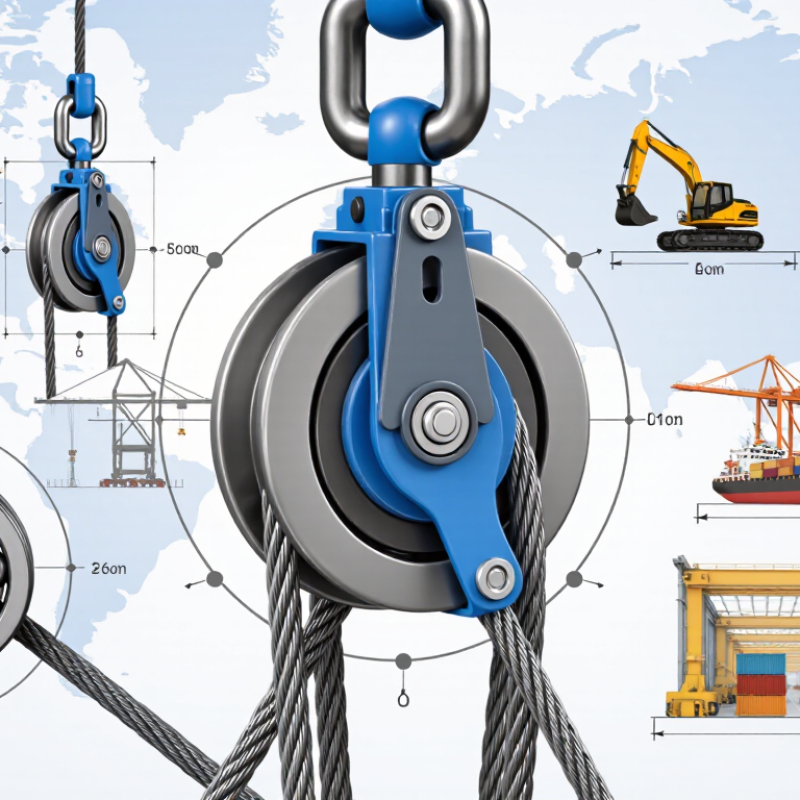
Rope block sheaves are grooved wheels mounted inside a block assembly. They guide, redirect, or multiply the mechanical advantage of wire rope during lifting operations. The groove supports the rope without forcing sharp bends. Fit comes first. A sheave should match the rope diameter, construction, working load, and bending frequency. A mismatched groove can flatten strands, increase wear, and create uneven movement.

For global sourcing, buyers should define sheave diameter, groove radius, material, bearing type, housing dimensions, and surface protection. The working environment also matters. Salt air, dust, low temperatures, and outdoor storage can change the required design. I usually request a detailed drawing, material statement, load test evidence, and inspection records before comparing quotations. A sample measurement is useful too. Small errors matter. A few millimeters can affect rope alignment and installation clearance.

The sourcing scope may include machined sheaves, forged components, assembled blocks, replacement bearings, and customized lifting arrangements. Suppliers should explain production capacity, quality controls, packaging methods, lead time, and export documentation clearly. Factory audits and sample inspections can reveal issues hidden in polished quotations. Still, no sourcing process is perfect. A supplier may pass document checks yet struggle with consistent groove machining. That risk deserves a second inspection, especially for repeated orders and heavy-duty use.

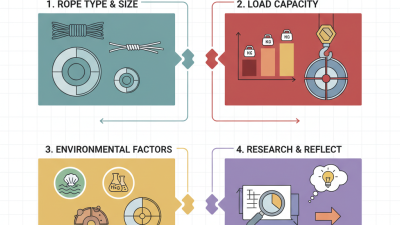
Step 1: Match Sheave Diameter to Rope Type Using the D/d Ratio

How to Choose Rope Block Sheaves for Global Sourcing?

Step 1: Match Sheave Diameter to Rope Type Using the D/d Ratio

The D/d ratio compares the sheave pitch diameter, D, with the rope diameter, d. For example, a 480 mm pitch-diameter sheave used with a 24 mm rope has a 20:1 ratio. This value helps control bending stress, fatigue, and service life. Measure the actual rope diameter, not only the nominal size on a purchase order. Rope construction, core material, lay, and flexibility can change the recommended ratio.

Wire rope often needs a different D/d ratio from fiber rope. A compact wire rope may tolerate tighter bending than a less flexible design, but the supplier’s technical data should decide the limit. Fiber ropes commonly require larger sheaves, especially when repeated lifting creates heat and compression. Check the groove profile too. A narrow or overly deep groove can pinch the rope and accelerate wear.

A larger ratio usually means a larger, heavier, and more expensive block. That trade-off matters during global sourcing. A spreadsheet may show a correct 20:1 result, yet the selected sheave can still fail if the rope diameter was measured under tension or the groove was poorly matched. Ask for the rope construction, minimum D/d recommendation, groove dimensions, and load-cycle data. Small details matter. Recheck them.

Step 2: Verify Load Capacity Against a Minimum 5:1 Design Factor

When sourcing rope block sheaves, verify load capacity against a minimum 5:1 design factor. This means the assembly’s minimum breaking load should be at least five times the planned working load. Do not rely only on the sheave diameter or housing size. Check the rope, axle, bearings, side plates, attachment point, and locking method as one system. The U.S. Bureau of Labor Statistics recorded 5,283 fatal work injuries in 2023, reinforcing the need for measurable lifting controls.

Calculate the expected working load, including the lifted weight, rope tension, reeving arrangement, acceleration, impact, and possible side loading. A two-part line does not always halve the load because friction reduces mechanical advantage. ISO 4308-1 provides guidance for selecting drums and sheaves, while ISO 4309 addresses wire-rope inspection and discard conditions. These standards support checking rope diameter, groove shape, and sheave-to-rope diameter ratios together.

Use the weakest component for the final rating. A sheave rated at 5:1 is not adequate if its pin or mounting bracket has a lower capacity. Ask suppliers for test certificates, material specifications, proof-load records, and traceable inspection documents. I have seen calculations fail because real shock loading was ignored. That mistake is easy to repeat. Recheck the design when rope speed, lift height, temperature, or duty cycle changes. Standards guide the decision, but site conditions still require engineering judgment.

Step 3: Compare Groove Profiles, Materials, and 6×19 or 6×37 Ropes

When choosing rope block sheaves, compare the groove profile with the actual wire rope construction. A groove that is too narrow can pinch a 6×19 rope and accelerate outer-wire wear. A groove that is too wide may reduce rope support and increase movement. For many applications, the groove radius should closely follow the rope diameter, often around 0.53 to 0.55 times that diameter. Confirm this value with the manufacturer’s engineering data.

A 6×19 rope usually has better abrasion resistance because it uses fewer, larger outer wires. It often suits lifting work with repeated contact. A 6×37 rope is more flexible, with smaller wires and more strands. It can bend around smaller sheaves, but its outer wires may wear faster.

Sheave material also matters. Steel handles heavy loads and impact well. Cast iron can offer good durability at a controlled cost. Nylon reduces weight and noise, but temperature and load limits need careful review.

Check hardness, corrosion protection, bearing fit, and groove finish before placing a global order. A clean catalog table is not enough. I have seen small groove errors create expensive rope damage.

Tips: Measure the rope diameter at several points, not once. Request a groove drawing, material certificate, and load test record. Compare samples under real bending conditions when possible. A decision based only on price may look efficient, but it can prove incomplete.

Step 4: Check ISO 4308, ASME B30.26, and Regional Compliance Requirements

When sourcing rope block sheaves globally, compliance must begin with the rope, load, and operating cycle. ISO 4308 provides guidance for selecting and inspecting steel wire ropes used with cranes. Check the rope diameter, construction, minimum breaking force, and discard criteria before approving a sheave. The groove must support the rope without crushing it. A poor groove profile can create local wear, even when the rated load looks acceptable. I have seen supplier spreadsheets hide this mistake.

ASME B30.26 covers rigging hardware requirements, including marking, inspection, and safe working load information. Confirm whether the selected sheave assembly falls within its application scope. Request material certificates, load-test records, dimensional drawings, and a traceable serial number. The International Labour Organization reported 2.93 million work-related deaths and about 395 million non-fatal injuries globally in 2019 estimates, published in 2023. These figures reinforce why documentation cannot be treated as paperwork only.

Tips: Compare D/d ratios, fleet angles, bearing capacity, and groove hardness. Ask for inspection photographs showing the flange, pin, and bearing seats. Verify WLL against dynamic loading, not only static weight. A spreadsheet is useful, but not enough.

Regional rules may add machine, lifting-equipment, or product-marking duties. In Europe, review applicable conformity requirements and the Machinery Regulation transition timeline. In North America, check the purchaser’s required safety standard and local authority rules. Some regions also require inspection intervals, language-specific manuals, or importer records. Keep those requirements in the purchase specification. A technically correct sheave can still fail regional acceptance.

How to Choose Rope Block Sheaves for Global Sourcing? - Step 4: Check ISO 4308, ASME B30.26, and Regional Compliance Requirements

Compliance Dimension Reference Standard or Regulation What to Check for a Rope Block Sheave Practical Sourcing Data to Request Acceptance Guidance Evidence Status
Wire-rope and sheave selection ISO 4308-1
Cranes — Selection of wire ropes — Part 1: General
Confirm that the sheave diameter, rope construction, reeving arrangement, operating duty, and crane classification are evaluated together rather than selecting the sheave in isolation. Nominal rope diameter; rope construction; minimum breaking force; number of falls; sheave pitch diameter; duty classification; expected operating cycles; rope speed and fleet angle. The supplier should provide the design basis showing how the selected sheave and rope combination meets the applicable ISO 4308 selection method. Required calculation
D/d ratio and fatigue life ISO 4308-1 and applicable crane design rules Verify the ratio of sheave pitch diameter to nominal rope diameter, commonly expressed as D/d. The required ratio depends on rope type, crane classification, reeving, and service severity. Sheave pitch diameter, not merely outside diameter; rope diameter; groove profile; fleet angle; calculated bending cycles; rope replacement criteria. Do not accept a universal D/d value without confirming the rope construction and duty class. A larger D/d generally reduces bending stress and can improve rope service life. Project-specific
Groove geometry ISO 4308-1; rope manufacturer’s installation requirements; applicable national crane standard Check groove radius, groove depth, groove pitch, side-wall condition, and compatibility with the actual rope diameter. The groove must support the rope without excessive pinching or instability. Dimensioned groove drawing; inspection method; allowable groove wear; surface-finish requirement; rope-to-groove compatibility statement. The drawing should identify the pitch diameter and groove dimensions. Wear limits should be defined before shipment and during service inspections. Drawing required
Block assembly and rigging hardware ASME B30.26
Rigging Hardware
Determine whether the complete block assembly or its individual components fall within the scope of ASME B30.26. Review the applicable requirements for load-bearing hardware, markings, inspection, and safe use. Rated load or working load limit; component identification; material certificates; pin, cheek-plate, bearing, and hook details; inspection and maintenance instructions. ASME B30.26 should not be treated as a substitute for a complete sheave-design calculation. Confirm the exact scope and supplement it with the applicable crane, hook, block, or below-the-hook-device standard. Scope confirmation required
Rated capacity and load path Applicable crane or lifting-device standard; ASME B30 series where specified by the purchaser Check the full load path, including rope tension, number of supporting rope parts, block efficiency, bearing loads, side plates, pins, hook or suspension point, and design factor. Rated load; maximum rope tension; reeving diagram; design load cases; proof-test load where required; bearing and pin calculations; finite-element report when applicable. The marked working load limit must correspond to the complete configuration, not only the sheave’s calculated radial capacity. Configuration-based
Material and traceability Purchaser specification; ISO 9001 quality system where contractually required; applicable regional product rules Verify material grade, heat treatment, weld procedure where relevant, bearing specification, corrosion protection, and traceability from raw material to finished component. Material test certificate; heat number; hardness results; non-destructive examination records; coating specification; bearing certificate; manufacturing inspection plan. Traceability should remain legible on the product or in linked production records. Critical load-bearing parts should not be supplied with undocumented material substitutions. Traceability required
Product marking and instructions ASME B30.26 where applicable; local lifting-equipment rules; purchaser documentation requirements Check permanent identification, rated capacity, serial or batch number, manufacturer documentation, reeving limitations, inspection intervals, lubrication points, and warnings against side loading where applicable. Product nameplate or marking plan; user manual; installation instructions; lubrication schedule; inspection checklist; discard criteria. Markings and instructions should be supplied in the language required by the destination market and should match the technical file and rating calculations. Document review
European Union and EEA Machinery Directive 2006/42/EC until 19 January 2027; Regulation (EU) 2023/1230 applies from 20 January 2027, subject to its scope and transitional rules Determine whether the rope block is a machine, partly completed machine, interchangeable equipment, lifting accessory, or component. Assess conformity obligations for the complete supplied product. Declaration of Conformity or Declaration of Incorporation as applicable; technical documentation; risk assessment; instructions; CE marking where legally required. CE marking is not automatically required for every standalone sheave. The classification and intended use must be established before selecting the conformity route. Legal classification required
United Kingdom Supply of Machinery (Safety) Regulations 2008, as amended; applicable lifting-equipment and workplace-safety requirements Confirm whether the product is supplied as machinery, lifting equipment, or a component, and identify the conformity-marking and technical-file obligations for Great Britain or Northern Ireland. Declaration documentation; risk assessment; user instructions; product marking; test and inspection records; destination-specific conformity information. Requirements differ between Great Britain and Northern Ireland in some circumstances. Confirm the current route with the importer or an authorized compliance specialist. Destination review
United States OSHA 29 CFR 1910 Subpart N and applicable ASME B30 standards; exact requirements depend on equipment type and workplace application Identify whether the block is part of a crane, hoist, sling system, or below-the-hook lifting device. Check the applicable OSHA workplace rule and the purchaser-specified ASME B30 volume. Rated-capacity marking; inspection and maintenance instructions; proof-test records where specified; engineering calculations; applicable ASME compliance statement. OSHA generally regulates employers and workplace use rather than issuing a universal product certificate for every sheave. Product acceptance should therefore be tied to the installed equipment and application. Application-based
Canada Applicable provincial or territorial occupational-safety rules; CSA B167 or other adopted standards where specified Confirm the province or territory, the type of lifting equipment, and the inspection, registration, engineering, and operator-documentation requirements that apply to the installation. Engineering design records; inspection reports; rated-capacity information; operating instructions; certificates required by the authority having jurisdiction. Canadian requirements are not completely uniform nationwide. The authority having jurisdiction and the final equipment integrator should be identified before order placement. Provincial review
Australia and New Zealand AS 1418 series for cranes and hoists; AS 4991 for lifting devices where applicable; local work-health-and-safety laws Determine whether the block is part of a crane or a separate lifting device. Confirm design, inspection, marking, and documentation requirements adopted by the relevant jurisdiction. Design verification; rated capacity; hazard assessment; inspection and maintenance instructions; test records; conformity documentation requested by the purchaser. Standards adoption and workplace requirements can vary by state, territory, or country. Confirm the edition and legally adopted version before manufacturing. Local adoption check
Inspection and service limits ISO 4308 guidance; applicable national crane regulations; manufacturer’s inspection instructions Define limits for groove wear, flange damage, cracks, deformation, bearing play, corrosion, rope climbing, misalignment, and abnormal noise or heat. Inspection checklist; dimensional wear limits; NDT method; bearing replacement criteria; inspection frequency; service history format. A sourcing package is incomplete if it covers only initial manufacture. The supplier should state how the block is inspected, maintained, repaired, and removed from service. Lifecycle requirement
Global sourcing release gate Buyer specification plus the standards and regulations applicable at the destination Release the purchase only after design calculations, drawings, markings, conformity documents, material traceability, inspection plans, and destination-market requirements are aligned. Approved technical specification; compliance matrix; signed drawing; calculation package; inspection and test plan; certificates; user manual; final data book. Use a written compliance matrix and identify the responsible party for each item: designer, manufacturer, importer, integrator, or end user. Purchase-release gate
Important sourcing note: ISO 4308-1 addresses wire-rope selection and related crane design considerations, while ASME B30.26 addresses rigging hardware within its defined scope. Neither standard automatically replaces the legal requirements, crane-design standards, or conformity procedures applicable in the destination market.

Conclusion

Rope Block Sheaves are essential components in lifting and material-handling systems because they guide wire ropes, distribute loads, and support safe, efficient operation. For global sourcing, selection should begin by matching the sheave diameter to the rope construction through the appropriate D/d ratio. Buyers should then confirm that the rated capacity meets the intended working load with at least a 5:1 design factor, while also considering groove geometry, sheave material, and compatibility with 6×19 or 6×37 rope configurations.

A reliable sourcing process should include reviewing applicable requirements such as ISO 4308, ASME B30.26, and relevant regional compliance rules. Supplier evaluation is equally important: verify dimensional tolerances, load and performance testing, material documentation, batch traceability, and inspection procedures. Finally, compare total cost rather than purchase price alone, including freight, maintenance, expected service life, replacement needs, and quality risks. This structured approach helps buyers secure dependable sheaves that balance safety, compatibility, compliance, and long-term value.