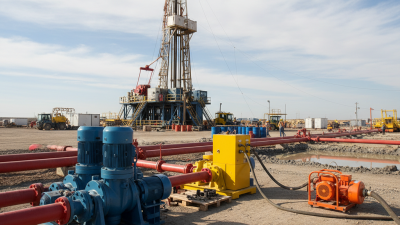
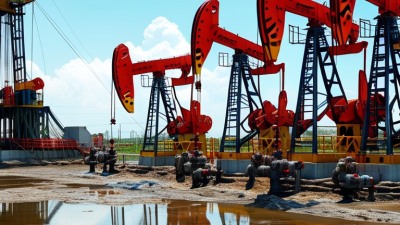
Choosing the right Oilfield Mud Pump affects drilling stability, circulation quality, and equipment safety. It also influences maintenance costs, downtime, and crew confidence. A pump that looks suitable on paper may struggle under real well conditions. Pressure changes, abrasive solids, temperature, and limited space can expose weaknesses quickly.
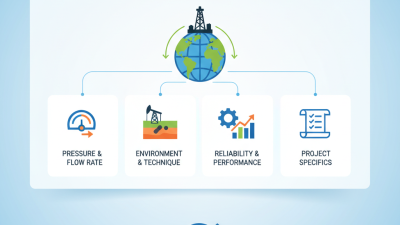
This guide examines the practical factors behind a reliable selection. It considers flow rate, pressure rating, power source, liner size, fluid properties, and expected operating hours. Experienced drilling teams usually compare manufacturer data with actual rig conditions. They inspect service records, spare-part availability, warranty terms, and technical support before making a decision. Small details matter, such as suction-line layout, vibration control, and access around the fluid end.
There is no universal pump for every formation. A high-pressure model may offer useful capacity, but it can increase energy use and maintenance demands. A smaller pump may reduce initial cost, yet fail to provide enough circulation during demanding sections. The process is rarely neat. Initial calculations can be wrong when mud density or solids content changes. That possibility deserves honest review.
Reliable selection combines engineering judgment, field experience, and verified specifications. Operators should request performance curves and confirm ratings under realistic conditions. Independent inspection can also reveal risks that brochures overlook. The best Oilfield Mud Pump is not simply the most powerful option. It is the pump that delivers stable performance, practical maintenance, and dependable support throughout the drilling program.

An oilfield mud pump is the circulation engine of the drilling system. It sends drilling fluid through the drill string, across the bit, and back up the annulus. This flow cools the bit, carries cuttings, and supports well control. API Specification 7K lists mud-pump pressure ratings reaching 10,000 psi, but maximum pressure is not the operating target. Excessive pressure can accelerate liner, piston, valve, and fluid-end wear.
Define the working conditions before comparing pump sizes. Record required flow rate, mud weight, viscosity, solids content, well depth, temperature, and expected circulating pressure. The IADC Drilling Manual stresses matching hydraulic performance with hole cleaning and pressure-control requirements. A deep well with dense, viscous mud demands more hydraulic power than a shallow section with clean water-based fluid. Power rises with both flow and pressure. Small errors become expensive.
Field checks matter. Watch discharge-pressure pulsation, suction stability, liner temperature, and unusual vibration during each shift. A pump may meet its nameplate rating but struggle with abrasive solids or poor suction conditions. I have seen calculations look perfect while a restricted suction line caused repeated valve damage. That was not a pump-size problem alone. It was an operating-condition problem. API 7K compliance helps, but local maintenance records and actual mud behavior deserve equal attention.
How to Choose the Right Oilfield Mud Pump?
Selecting a mud pump starts with the well plan, not the pump catalogue. Drilling depth affects pressure demand through hydrostatic head and friction losses. Deeper wells often require stronger pressure performance, but depth alone does not determine pump size. A shallow, narrow hole can still need substantial pressure when mud viscosity rises.
Match flow rate to hole diameter, annular velocity, and required cuttings transport. Calculate the target gallons per minute for each drilling section, then check whether the pump can maintain that flow continuously. For example, a pump rated for 1,000 gallons per minute may struggle if pressure rises near its limit. I have seen operating teams focus on maximum flow and overlook pressure at that flow. That decision can create unstable circulation and unnecessary downtime.
Tips: Build a simple pressure-and-flow schedule for every hole section. Include mud weight, viscosity, nozzle pressure loss, surface friction, and a practical safety margin. Check pump power, liner size, stroke rate, and expected wear. Do not rely only on the nameplate rating. Field conditions change, sometimes faster than planned. A conservative calculation is usually safer, although it may increase initial equipment cost. Review the design with drilling and mud engineers before mobilization.
Match pump capacity with drilling depth, required flow rate, and pressure. The chart shows representative engineering planning values for land drilling applications.
As depth increases, the mud pump normally requires higher flow capacity and pressure capability to maintain annular velocity, hole cleaning, and circulation efficiency. Final pump selection should also consider mud density, rheology, nozzle pressure loss, wellbore geometry, and an appropriate operating margin.
Choosing the right oilfield mud pump starts with the drilling fluid, not the catalog. Triplex pumps provide relatively smooth flow and suit high-pressure drilling systems. Duplex pumps can offer strong displacement and simpler maintenance. However, pump type alone does not determine performance.
Check the fluid’s viscosity, density, temperature, and solids content. Water-based mud, oil-based mud, brine, and polymer fluids can stress different wetted components. Abrasive sand may damage liners, valves, and pistons quickly. Confirm material compatibility with the fluid supplier and pump engineer. Small mismatches become expensive failures. A spreadsheet can look precise, yet field mud is rarely consistent.
Power requirements need practical calculation. Hydraulic horsepower is approximately pressure multiplied by flow, divided by 1,714. Then allow for mechanical losses, startup loads, and a sensible operating margin. For example, a pump delivering 500 gallons per minute at 5,000 psi needs about 1,458 hydraulic horsepower before efficiency losses. Check the engine, transmission, cooling system, and available electrical supply together. More power is not always better.
Tips: Record actual pressure and flow during several drilling stages. Inspect valves and liners after abrasive runs. Ask whether the pump can maintain output at the planned stroke rate. Leave room for changing mud properties. I would also review maintenance access carefully; a powerful pump is still a poor choice if routine service takes too long.
How to Choose the Right Oilfield Mud Pump?
A dependable mud pump must tolerate abrasive solids, pressure changes, and long operating hours. Durability starts with the fluid end, where liners, pistons, valves, and seats face constant punishment. Check rated pressure, flow capacity, fatigue resistance, and material compatibility with the drilling fluid. A heavy frame helps, but a strong frame alone proves little.
Maintenance needs should be measured in hours, not promises. Ask how quickly technicians can inspect valves, replace liners, and access lubrication points. Clear maintenance records reveal more than polished equipment. Keep critical seals, gaskets, and wear parts nearby. Small delays can stop an entire drilling operation. Still, spare parts can become unnecessary inventory if failure data is ignored.
Safety requires more than a relief valve. Confirm guarding, pressure monitoring, emergency shutdown access, and secure connections around high-pressure lines. Operators need practical training and visible procedures. Total cost includes energy use, fluid losses, labor, downtime, transport, and disposal of worn parts. A cheaper pump may consume more power or demand frequent repairs. That calculation is often missed. Review service history from comparable wells, then challenge optimistic estimates. Real conditions are usually less tidy.
| Pump Configuration | Typical Operating Range | Durability Profile | Maintenance Needs | Safety Considerations | Indicative Lifecycle Cost | Best-Fit Application | Overall Selection Assessment |
|---|---|---|---|---|---|---|---|
| Triplex, single-acting |
Discharge pressure: approximately 5,000–7,500 psi Flow: commonly 500–1,500 gal/min |
5/5 Three plungers reduce pressure pulsation and distribute the load effectively. Suitable for demanding continuous drilling service when correctly sized and lubricated. |
Moderate. Routine work typically includes fluid-end inspection, expendable replacement, lubrication checks, valve and liner inspection, and periodic power-end service. | Requires correctly rated discharge piping, pulsation dampeners, pressure relief protection, guards, lockout/tagout procedures, and regular inspection for leaks and vibration. | Medium. Higher initial and component costs can be offset by strong efficiency, broad parts availability, and predictable expendable replacement. | High-pressure land and offshore drilling, directional drilling, and operations requiring a stable high-pressure flow. |
Recommended A balanced choice when reliability, pressure capability, and long-term operating performance are priorities. |
| Duplex, double-acting |
Discharge pressure: approximately 3,000–5,000 psi Flow: commonly 300–1,000 gal/min |
4/5 A robust and mechanically simple design, although pressure pulsation and higher moving-mass effects may increase wear in some operating conditions. |
Moderate to high. More frequent attention may be required for pistons, packing, valves, liners, and dampener performance, depending on duty cycle and mud properties. | Strong attention is required for packing leakage, exposed moving parts, pressure fluctuations, and safe depressurization before maintenance. | Low to medium. The initial purchase cost may be attractive, but fluid-end wear and maintenance frequency can raise total ownership cost in severe service. | Moderate-pressure drilling, workover, well-servicing, and applications where a simple, repairable design is valuable. |
Suitable Cost-effective for moderate-pressure duty, but less attractive when smooth high-pressure delivery and minimum maintenance are essential. |
| Quintuplex, single-acting |
Discharge pressure: approximately 7,500–10,000 psi Flow: commonly 500–2,000 gal/min |
5/5 Five plungers provide low pulsation, good load sharing, and smooth hydraulic performance for high-pressure, high-duty-cycle service. |
Moderate. The pump has more fluid-end components to inspect, but lower pulsation can reduce stress on connected equipment and improve operating stability. | Requires rigorous pressure-control procedures, certified high-pressure equipment, effective relief systems, guarding, remote monitoring, and disciplined maintenance isolation. | Medium to high. Capital cost is typically higher, but reduced pulsation, high throughput, and extended service capability may lower cost per operating hour. | High-pressure drilling, extended-reach wells, managed-pressure operations, and demanding continuous-duty applications. |
Recommended Strongest option when high pressure, smooth flow, and operating continuity justify the higher acquisition cost. |
| Triplex, compact or trailer-mounted |
Discharge pressure: approximately 3,000–5,000 psi Flow: commonly 200–800 gal/min |
4/5 Good durability when operated within the rated envelope; transport vibration, limited cooling, and restricted space can affect service life. |
Moderate. Accessibility, fluid-end changeout time, engine or motor condition, and transport-related inspections are important. | Stabilize the trailer or skid before operation, verify grounding and guarding, control hose movement, and confirm safe access around the discharge manifold. | Medium. Mobility can reduce rig-up time and logistics costs, but transport, setup, and engine-related maintenance add ownership expenses. | Well servicing, stimulation support, remote locations, temporary drilling packages, and operations requiring rapid relocation. |
Suitable A practical choice where mobility and moderate pressure are more important than maximum continuous output. |
| Electric-drive triplex |
Discharge pressure: approximately 5,000–7,500 psi Flow: commonly 500–1,500 gal/min |
5/5 Fewer engine-related wear items and precise speed control can support consistent operation, provided the electrical system and cooling are properly maintained. |
Low to moderate mechanical maintenance. Regular inspection of motors, variable-frequency drives, cables, cooling systems, lubrication points, and fluid-end consumables remains necessary. | Electrical isolation, arc-flash protection, hazardous-area compliance, grounding, enclosure integrity, and trained electrical personnel are essential. | Medium. Higher electrical infrastructure requirements may be offset by efficient power use, reduced engine maintenance, and improved controllability. | Fixed drilling installations with reliable electrical supply, emissions restrictions, automated control, or demand for precise flow adjustment. |
Recommended Particularly effective where power infrastructure, automation, low emissions, and predictable speed control are available. |
Choosing the right oilfield mud pump requires more than comparing flow rates and purchase prices. Verify the manufacturer’s field support before signing. Ask for documented response times, technician coverage, spare-parts availability, and failure-analysis records. Request references from comparable drilling conditions. A phone number is not a support system.
Standards matter during procurement and commissioning. Confirm that the proposed pump configuration aligns with API Spec 7K and relevant API RP 54 safety practices. Request material certificates, factory test records, pressure-test results, and current operating limits. The U.S. Bureau of Labor Statistics reported a 2019 fatal injury rate of 24.0 per 100,000 workers in oil and gas extraction, compared with 3.5 across private industry. This is not a pump-specific figure, but it shows why verification cannot be treated as paperwork.
Installation details often decide reliability. Check foundation flatness, anchor loads, shaft alignment, suction-line length, and piping supports. Verify relief-valve discharge routing and pulsation-dampener precharge before pressure testing. Confirm guarding, access clearance, electrical classification, and local inspection requirements. API guidance helps, but the manufacturer must provide pump-specific limits. Field experience also exposes uncomfortable gaps: a technically compliant pump can still fail when suction conditions are poor or maintenance access is cramped. Leave room for correction. Assume the first installation plan may be incomplete.