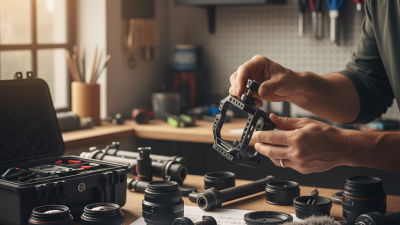
Buying the right Rig Accessories can determine whether a project runs smoothly or loses valuable field time. Global buyers face different rig models, working conditions, currencies, and supplier capabilities. A coupling that fits one system may fail on another. Small details matter.
This guide introduces ten practical accessories for drilling, construction, mining, and industrial rig operations. It considers compatibility, material quality, installation effort, maintenance access, and transport requirements. Experienced purchasing teams often check thread profiles, load ratings, corrosion resistance, and operating temperatures before approving an item. They also request drawings, inspection records, certificates, and clear warranty terms. Good documentation is not decoration. It supports safer decisions.
Climate changes the calculation. Dust can damage seals, while salt air accelerates corrosion. Remote sites may need spare hoses, adapters, clamps, and protective covers. Reliable suppliers should explain limitations instead of promising universal performance. That matters when a component must travel across borders and support a demanding worksite. Buyers should also verify applicable technical standards and import requirements in the destination market.
No perfect ranking exists.
A low-cost accessory may become expensive after repeated replacement. A premium product may still be unsuitable without correct fitting or trained installation. This overview therefore balances field practicality with professional purchasing discipline. It highlights useful options, but careful measurement remains essential. Even experienced teams make assumptions. Reviewing those assumptions can prevent avoidable downtime, damaged equipment, and rushed purchasing decisions.
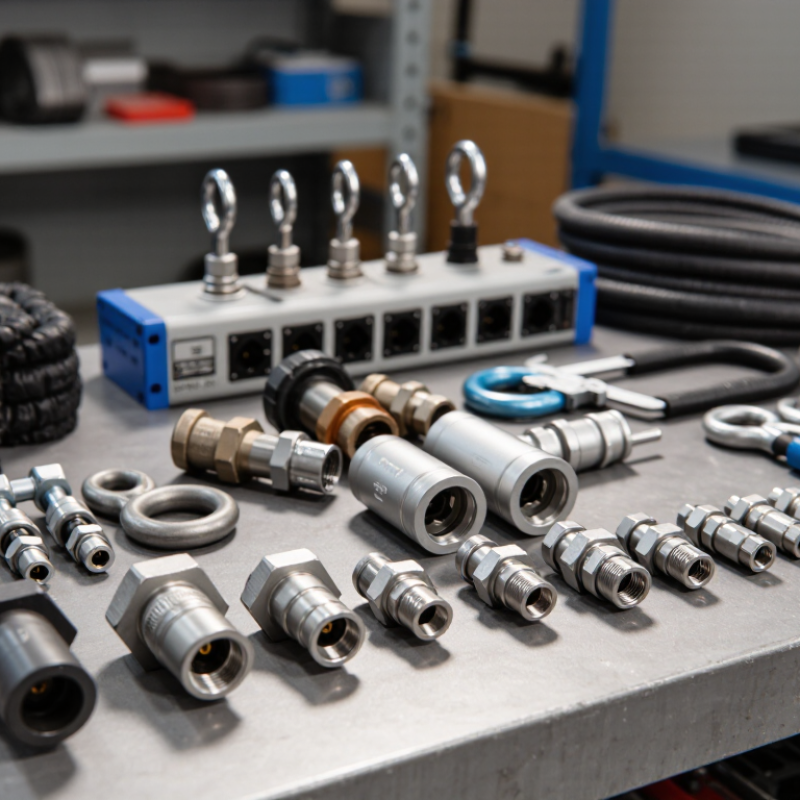
A reliable rig is more than its main machine. Global buyers should classify accessories by the work they protect and support. Hoisting accessories include slings, shackles, hooks, spreader beams, and lifting points. Each item needs a visible rated capacity and traceable inspection record. Check load angles, edge damage, corrosion, and latch movement before approval. Small details matter.
Power accessories cover generators, cables, connectors, control panels, batteries, and grounding equipment. Select voltage, frequency, enclosure rating, and connection type for the operating site. A cable may look robust yet fail under heat, moisture, or repeated bending. Ask for test reports, wiring diagrams, and maintenance intervals. I have seen purchasing teams compare prices while overlooking spare connectors. That delay can stop a shift.
Fluid accessories include pumps, hoses, valves, filters, pressure gauges, and spill-control trays. Confirm pressure ratings, temperature limits, chemical compatibility, and hose length. Clean fittings prevent leaks and reduce contamination risks. Safety accessories deserve a separate review: barriers, emergency stops, eye protection, fire equipment, first-aid kits, and gas detection devices. Match them to the task, not a generic checklist. This classification is practical, but not perfect. A valve can affect both fluid control and emergency response. Buyers should record that overlap in the technical file. When specifications conflict, pause the order and request clarification from a qualified engineer. It is better to question a familiar accessory than trust an incomplete document.
Hoisting, power, fluid, and safety accessories ranked by indicative procurement priority for drilling-rig operations. The score reflects operational importance, replacement frequency, and cross-rig applicability rather than any company or brand market data.
Key takeaway: Hoisting and fluid-control accessories typically receive the highest purchasing priority because they directly affect load handling, pressure management, uptime, and site safety.
For global rig buyers, pressure class is more than a number on a product sheet. Well-control accessories rated from 2,000 to 20,000 psi must match the complete pressure path, including valves, flanges, choke and kill lines, gauges, unions, hoses, and control accumulators. The weakest component sets the practical limit.
Check the stamped working pressure, temperature range, bore size, connection type, and material traceability. A 10,000 psi valve cannot safely compensate for a 5,000 psi flange. Inspectors should compare nameplates with drawings, test certificates, and recognized well-control standards. Do not rely on paint, packaging, or a seller’s verbal assurance. Verify calibration dates for pressure gauges, then confirm that relief devices protect the lowest-rated component.
Field details matter. Look for damaged threads, corroded sealing surfaces, missing caps, and distorted hammer unions. Store elastomer seals away from heat and sunlight. Pressure-test assembled equipment under an approved procedure, using a controlled exclusion zone and recorded results. Small leaks often appear around connections before major failures develop.
A checklist can still miss something. Human review matters. Different regions may use different documentation formats, units, and inspection expectations, so buyers should request clear conversion records and complete serial-number traceability. If the equipment will face sour fluids, low temperatures, or repeated cycling, confirm that the materials and seals are suitable for those conditions. Never assume a higher pressure class solves every compatibility problem.
| No. | Rig Accessory | Primary Function | Typical Working Pressure Classes | Common Size or Configuration | Key Standards or Specifications | Buyer Verification Checklist | Critical Selection Consideration |
|---|---|---|---|---|---|---|---|
| 1 | Annular Blowout Preventer | Seals around drill pipe, casing, tubing, or irregular tubular profiles during well-control operations. | 2,000–20,000 psi WP | 13⅝ in 16¾ in 18¾ in Available in multiple bore sizes and pressure ratings. | API Specification 16A; API 6A interfaces where applicable; NACE MR0175/ISO 15156 for sour service. | Verify rated working pressure, maximum closing pressure, bore size, elastomer temperature range, control-fluid compatibility, serial traceability, and valid pressure-test records. | Annular elements have operating limitations that depend on pipe size, closure frequency, temperature, and elastomer compound. |
| 2 | Ram Blowout Preventer | Provides positive sealing with pipe, blind, shear, or variable-bore ram assemblies. | 2,000–20,000 psi WP | 7⅛ in 11 in 13⅝ in 18¾ in Single, double, or triple configurations. | API Specification 16A; API Specification 16D for control systems; API 6A or 17D interface requirements where applicable. | Check ram type, shear capability, closing ratio, bore compatibility, side outlets, hydraulic operating pressure, body material class, and factory acceptance test documentation. | Shear-rams must be matched to the actual tubular grade, wall thickness, tool joints, and well conditions; do not infer shear capability from WP rating alone. |
| 3 | Choke Manifold | Directs and controls well fluids during well killing, circulation, pressure testing, and flowback operations. | 2,000–20,000 psi WP | 2 in–4 in nominal bore Fixed or remotely operated choke arrangements. | API Specification 16C; API 6A valve and flange requirements where applicable; NACE MR0175/ISO 15156 for sour service. | Verify manifold WP, bore size, flow-path layout, valve and choke ratings, erosion allowance, connection type, pressure-test chart, and replaceable wear-part availability. | Flow velocity, solids content, gas volume, and erosive service can reduce component life even when pressure rating is adequate. |
| 4 | Kill Manifold | Provides a controlled high-pressure route for pumping kill fluid into the wellbore. | 2,000–20,000 psi WP | 2 in–4 in nominal bore Manual or remotely actuated valve arrangements. | API Specification 16C; API 6A requirements for valves, flanges, and pressure-containing components where applicable. | Confirm maximum working pressure, pump-in flow rate, valve orientation, check-valve arrangement, connection dimensions, pressure-test acceptance criteria, and drain/bleed provisions. | The manifold rating must be suitable for the maximum anticipated surface pressure and the selected kill-pump discharge pressure. |
| 5 | High-Pressure Choke Valve | Regulates flow and maintains controlled backpressure during drilling, completion, testing, and well-kill operations. | 2,000–20,000 psi WP | Fixed choke Adjustable choke Positive choke Manual or hydraulic actuation. | API Specification 16C; API 6A pressure-containing and pressure-controlling requirements where applicable. | Verify trim material, minimum and maximum choke size, pressure drop, flow coefficient, operating torque or hydraulic pressure, erosion resistance, and actuator fail position. | Select the trim for the expected pressure drop, multiphase flow, sand concentration, temperature, and frequency of adjustment. |
| 6 | Hydraulic Remote-Control Valve | Allows remote opening and closing of choke- or kill-line flow paths from a safe control location. | 2,000–20,000 psi WP | 2 in–4 in nominal bore Gate or ball-type configurations. | API Specification 16C; API Specification 16D for associated BOP control systems; API 6A where applicable. | Check valve WP, hydraulic operating pressure, response time, fail-safe position, cycle rating, control-line compatibility, emergency override, and functional-test records. | Remote actuation pressure is not the same as process working pressure; both values must be specified and verified separately. |
| 7 | Inside Blowout Preventer | Provides a one-way barrier inside the drillstring to prevent upward flow through the tubulars. | 5,000–20,000 psi WP | Kelly cock Drop-in check valve Float-type valve Selected for drill-pipe and tool-joint dimensions. | API Specification 7-1 or applicable drilling-tool requirements; API Specification 16A when supplied as a BOP-related component. | Verify connection type, drift diameter, maximum internal pressure, differential-pressure direction, temperature range, seal material, operating procedure, and compatibility with the drillstring. | Internal diameter and tool-joint geometry must allow passage, stabbing, or deployment without restricting planned operations. |
| 8 | BOP Control System and Accumulator Unit | Stores and distributes hydraulic energy for rapid operation of annular and ram preventers and associated valves. | Control pressure commonly 3,000 psi; process equipment controlled may be rated 2,000–20,000 psi WP | Air or nitrogen pre-charge Remote panels Sized for required closing volume and response time. | API Specification 16D; applicable electrical, pressure-vessel, and offshore safety requirements. | Verify usable fluid volume, pre-charge pressure, pump capacity, closing time, reserve capacity, hydraulic-fluid type, alarm functions, emergency shutdown logic, and hose certification. | Accumulator capacity must be calculated from the actual BOP stack volume and required operating sequence, not selected only by nominal system pressure. |
| 9 | Spacer Spool and Adapter Spool | Provides dimensional spacing, pressure-rated transitions, and connection interfaces within the wellhead and BOP stack. | 2,000–20,000 psi WP | Flanged Studded Concentric or offset bore Custom bore and outlet arrangements. | API Specification 6A; API Specification 16A for BOP-stack applications; API 17D for subsea interfaces where applicable. | Confirm bore profile, flange or hub dimensions, ring-gasket type, outlet size and position, material class, temperature class, PSL, PR level, and dimensional inspection report. | Pressure rating is valid only when the spool, connector, gasket, studs, valves, and mating equipment form a compatible pressure boundary. |
| 10 | High-Pressure Flexible Choke or Kill Line | Transfers drilling or completion fluids between the BOP stack, choke manifold, and kill manifold while accommodating movement and vibration. | 2,000–20,000 psi WP | 2 in–4 in nominal bore Flexible hose or articulated rigid-line assembly. | API Specification 16C; API Specification 7K for applicable drilling-fluid hose requirements; relevant fire, bend-radius, and sour-service specifications. | Verify WP and test pressure, minimum bend radius, length tolerance, end connections, temperature range, tensile load, fire resistance, hose serial number, and inspection history. | Never exceed the manufacturer’s minimum bend radius or impose unsupported tensile, torsional, or vibrational loads on the pressure-containing assembly. |
Top 10 Rig Accessories Every Global Buyer Needs?
API Spec 7K and API 6A serve different equipment groups. This distinction matters during purchasing. API Spec 7K commonly covers drilling and well-servicing equipment, including rotary hoses, choke and kill lines, elevators, slips, spiders, safety clamps, kelly cocks, and blowout-preventer handling tools. API 6A focuses on wellhead and Christmas tree equipment, such as valves, chokes, actuators, flanges, and related pressure-containing parts.
Do not treat every accessory as interchangeable. A rotary hose needs suitable working pressure, temperature range, connection type, and bend radius. A wellhead valve requires the correct pressure rating, bore size, material class, temperature class, and product specification level. Pressure equipment can look identical from the outside. Its limits may differ significantly. Ask for certificates, pressure-test records, material traceability, and inspection results. Check the applicable API edition and purchasing specification before approval.
Field procurement often fails at the interface. A compliant valve may still mismatch the flange, gasket, actuator, or control system. I have seen schedules delayed by one incorrect ring-groove dimension. Small details matter. Buyers should compare drawings, load ratings, thread forms, and maintenance requirements with the complete rig system. Standards support reliability, but they do not replace engineering review. A checklist can still miss an awkward installation condition, especially when suppliers provide incomplete technical files.
Rig accessories must be judged by load data, not appearance. ISO 13535 provides a useful reference for hoisting equipment used in drilling operations. Buyers should compare rated capacity, test loads, and operating limits with the planned lift. A strong-looking elevator can still fail under repeated loading. Check certificates, material records, heat treatment details, and dimensional drawings. Keep every document traceable to the supplied equipment.
Fatigue deserves careful attention. Repeated lifting, shock loading, corrosion, and poor alignment can reduce service life. Ask for fatigue design information and inspection history, especially for links, elevators, bails, and lifting subs. Confirm whether capacity changes with angle, temperature, wear, or connection type.
Standards help, but they do not replace an engineered lifting plan or local inspection requirements. Small omissions happen. They should be questioned.
Tips: Record the serial number, rated load, test date, and next inspection date. Examine load-bearing surfaces for cracks, scoring, deformation, and abnormal wear. Use qualified inspectors for non-destructive testing when required. Never accept a certificate with unclear revision details. Compare the document with the actual dimensions and markings. If field conditions differ from the original design assumptions, stop and review the lift. A missed detail may be more important than a higher advertised capacity.
Top 10 Rig Accessories Every Global Buyer Needs?
Global Buying Matrix: Compare TCO, Spares, Lead Times, and Certification
A global buyer should assess ten rig accessories as one operating system. These include slips, elevators, power tongs, manual tongs, lifting subs, saver subs, mud valves, swivel adapters, torque gauges, and seal kits. Each item affects safety, uptime, and maintenance planning. A low purchase price can hide expensive freight, specialist installation, or short service life. Field experience shows that compatibility matters more than appearance.
Build a buying matrix with four core columns. Total cost of ownership should include purchase price, shipping, inspections, consumables, repairs, and downtime. Spares should cover seal kits, jaw inserts, pins, gauges, and fasteners. Keep critical parts locally when possible. Lead times need separate targets for standard and customized equipment. A twelve-week estimate may become sixteen weeks after drawing approval. It happens.
Certification requires careful verification. Request material traceability, load-test records, inspection reports, and relevant conformity documents. Requirements can differ by country, rig class, and lifting application. Check applicable standards before issuing a purchase order. Ask whether certificates cover the exact serial number, not only the product family. That detail is often missed. My own matrix would also record supplier response time and technical support quality, because paperwork cannot repair a failed tong at midnight.