Choosing a China Top Rope Block Sheaves Manufacturer Supplier requires more than comparing prices or polished catalogs. This introduction examines how to assess Rope Block Sheaves for cranes, hoists, winches, and material-handling systems. It focuses on groove design, sheave diameter, rope compatibility, bearing quality, load capacity, and corrosion protection. These details affect rope bending, heat buildup, noise, and service life.
W. E. H. Chaplin, a recognized wire-rope engineering author, offers a practical principle associated with his work: “The sheave must support the rope without forcing it beyond its working limits.” That idea remains useful. A reliable supplier should explain how its sheaves match the rope construction and operating conditions. Factory experience matters. So does documented testing.
Look closely at the evidence. Ask for material certificates, dimensional inspection records, load-test information, and bearing specifications. Check whether the grooves are smooth, correctly shaped, and free from sharp edges. A factory visit can reveal machining discipline more clearly than a brochure. Not every low-cost option is poor. Not every premium product is suitable.
Some uncertainty is unavoidable. Supplier claims still need verification. A detailed comparison should therefore review manufacturing capability, quality control, customization support, packaging, delivery consistency, and after-sales guidance. It should also consider maintenance access in real workplaces, where dust, moisture, and uneven loading can shorten component life. The best supplier is not simply the cheapest. It is the one that can provide traceable evidence, honest limitations, and Rope Block Sheaves suited to the actual application.
What Are Rope Block Sheaves and How Do They Work?
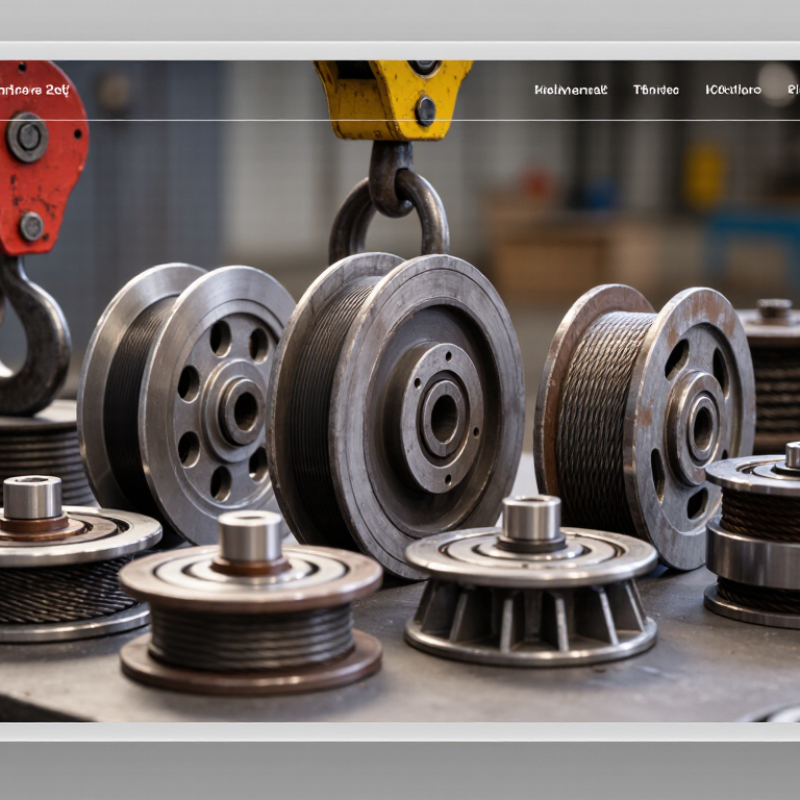
Rope block sheaves are grooved wheels that guide and support wire rope in lifting systems. Each sheave rotates around an axle, reducing sliding friction as the rope moves. Several sheaves can be assembled inside a block, creating a reeving system for cranes, hoists, and material-handling equipment.
The rope sits inside the sheave groove and follows its curved path. When the rope is pulled, the sheave turns with it. A single sheave can change the pulling direction, while multiple sheaves can increase lifting capacity and reduce the required input force. The trade-off is speed. More rope movement may be needed to lift the same load.
Practical selection requires more than checking the rated load. The sheave diameter should match the rope diameter and bending requirements. Groove shape matters too. A narrow groove can damage the rope, while an oversized groove may allow unstable movement. Bearings, side plates, pins, and lubrication also deserve inspection. Small faults become serious under repeated loading. Even experienced operators can overlook wear hidden behind a side plate. That is why a reliable manufacturer or supplier should provide tested dimensions, material information, load data, and inspection guidance. Field conditions remain unpredictable, so the design should allow a sensible safety margin rather than relying on appearance alone.
Rope block sheaves guide and support a rope in lifting equipment. The ideal mechanical advantage is approximately equal to the number of rope parts directly supporting the moving block.
How to read the chart: A fixed sheave mainly changes the rope direction and provides a 1:1 ideal mechanical advantage. Adding supporting rope parts increases lifting advantage, although real systems provide less advantage because of sheave friction, rope bending, alignment, and weight.
China Top Rope Block Sheaves Manufacturer Supplier?
Key Types of Rope Block Sheaves for Different Lifting Applications
Rope block sheaves should match the load, rope diameter, lift angle, and working environment. Single-sheave blocks suit light positioning work and compact lifting systems. Multi-sheave blocks provide greater mechanical advantage for cranes and construction hoists. Snatch blocks open at the side, allowing quick rope installation during field repairs. Swivel blocks help control changing pull directions, while equalizer blocks distribute tension across multiple ropes.
According to Grand View Research, the global wire-rope market exceeded USD 10 billion in 2023 and is expected to grow steadily through 2030. This expansion increases demand for accurately machined sheaves and dependable lifting components. In practice, poor groove alignment can create uneven rope wear. It may also increase bending fatigue. ISO 4309 recommends regular inspection of rope condition, lubrication, and discard criteria. However, real sites are often less disciplined than manuals suggest.
Tips: Measure the rope before selecting a sheave. Keep the sheave groove slightly wider than the rope diameter. Check flanges, bearings, pins, and side plates before each shift. Look for flat spots, cracks, corrosion, and abnormal noise. A supplier should provide working load limits, material details, test records, and inspection guidance. Do not rely on appearance alone. Field conditions can expose weaknesses that factory testing misses.
When evaluating a China top rope block sheaves manufacturer or supplier, inspect materials before reviewing price.
Quality sheaves commonly use forged or normalized alloy steel for high-load lifting applications. Cast steel can suit moderate loads when casting quality is controlled. The groove needs a smooth radius, accurate alignment, and enough depth to support the rope without pinching. A rough groove can damage outer wires quickly. The D/d ratio also matters. It should match the rope construction, load cycle, and operating speed.
ISO 4309:2017 provides inspection guidance for wire ropes and highlights broken wires, abrasion, corrosion, and diameter loss. These factors should influence sheave design and maintenance planning. The International Labour Organization estimated 2.93 million work-related deaths globally in 2023. That figure does not identify sheave failures, but it reinforces the value of traceable safety controls. Material certificates, heat-treatment records, dimensional reports, and load-test results should accompany each production batch. Bearing protection also deserves attention, especially in dusty yards or humid ports.
A polished surface alone proves little. In field checks, a small alignment error can create uneven groove wear and unusual rope movement. Harder steel may resist abrasion, yet excessive hardness can increase rope damage. This trade-off is often underestimated. The U.S. Bureau of Labor Statistics recorded 5,283 fatal occupational injuries in 2023, making practical inspection discipline more than a paperwork exercise. Supplier evaluation should include prototype testing, serial traceability, and clear rejection criteria. Suppliers should also admit design limits. That is not weakness.
China Top Rope Block Sheaves Manufacturer Supplier?
Evaluating a China-based rope block sheaves manufacturer requires more than comparing quotations. Examine the workshop, not only the website. Check whether the supplier controls machining, assembly, and quality inspection. Ask for material certificates, dimensional reports, and traceable batch records. A reliable manufacturer should explain groove geometry, bearing selection, surface treatment, and rated load clearly. Avoid vague phrases such as “heavy duty” without test evidence.
Request a sample sheave before placing a large order. Measure the groove profile, cheek plate thickness, shaft fit, and rotation smoothness. Check for sharp edges, uneven coating, or excessive bearing play. Load testing should match the intended application and include documented procedures. Factory visits can reveal practical details, such as clean storage, calibrated instruments, and organized finished goods. Small details matter.
Communication is another useful test. Can the engineering team answer technical questions without guessing? Do drawings, packing lists, and inspection records match the delivered product? In sourcing work, I once focused too heavily on price and overlooked packaging strength. That mistake caused avoidable handling damage. A second inspection would have helped. No supplier is perfect, including experienced ones. Leave room for corrective actions, written tolerances, and independent inspection when the project risk is high. Reliable cooperation grows from evidence, consistent communication, and honest responses to defects.
| Evaluation Dimension | What to Verify | Objective Evidence or Data | Recommended Evaluation Method | Suggested Weight |
|---|---|---|---|---|
| Load Capacity and WLL | Confirm the working load limit, rope diameter range, number of rope parts, and intended lifting application. | Signed technical drawing, load calculation, working load limit statement, and applicable design safety factors. | Check that the stated capacity matches the complete block assembly, not only the sheave or side plates. | 15% |
| Sheave-to-Rope Diameter Ratio | Evaluate the sheave pitch diameter in relation to the wire-rope diameter, commonly expressed as D/d. | The manufacturer should provide the actual pitch diameter, rope diameter, and the design basis for the selected ratio. | Compare the design with the rope and equipment manufacturer’s requirements; do not apply one universal ratio to every application. | 10% |
| Groove Geometry | Check groove radius, groove depth, pitch, flanges, and surface finish for compatibility with the specified rope. | Detailed drawing with tolerances and inspection records for groove dimensions and concentricity. | Verify measurements using calibrated gauges, profile templates, or coordinate measuring equipment where required. | 12% |
| Material and Heat Treatment | Confirm material grades for the sheave, shaft, side plates, bushings, and other load-bearing components. | Material certificates, chemical composition reports, mechanical test results, and heat-treatment records where applicable. | Match certificate heat numbers with production records and perform independent material verification for critical orders. | 10% |
| Bearings, Bushings, and Lubrication | Review bearing type, radial and axial load capability, sealing arrangement, lubrication method, and service temperature. | Component specifications, assembly drawings, grease or oil requirements, and maintenance instructions. | Confirm that the bearing or bushing rating is suitable for the calculated operating loads and rotation speed. | 8% |
| Structural Design and Safety | Assess side plates, cheek plates, pins, axle retention, guards, fasteners, and resistance to deformation. | Finite element analysis where appropriate, design calculations, weld procedures, and inspection records. | Review failure modes and confirm that critical load paths are documented and inspected. | 12% |
| Testing and Inspection | Determine whether dimensional, functional, non-destructive, and load tests are defined for the product. | Inspection and test plan, calibration certificates, final inspection report, and test certificates for the supplied batch. | Require acceptance criteria before production and confirm that reports identify the actual serial or batch number. | 12% |
| Standards and Regulatory Compliance | Identify the standards relevant to the final application, such as wire-rope selection, inspection, lifting equipment, or machinery safety requirements. | A compliance matrix referencing applicable editions of standards such as ISO 4309, ISO 16625, or legally required local regulations. | Check that each claimed standard actually applies to the product and intended use; request supporting test or design records. | 10% |
| Quality Management and Traceability | Evaluate control of drawings, purchasing, process inspection, nonconforming products, corrective actions, and document retention. | Quality manual, process flow chart, inspection procedures, internal audit records, and traceability from raw material to shipment. | Conduct a document review and, for important orders, an on-site or third-party production audit. | 8% |
| Corrosion Protection and Finish | Review coating system, exposed surface protection, drainage, galvanic corrosion risks, and environmental suitability. | Surface-treatment specification, coating thickness records, paint or plating certificates, and corrosion-resistance requirements. | Specify the operating environment, including humidity, salt exposure, outdoor use, and temperature before quotation. | 5% |
| Packaging, Delivery, and After-Sales Support | Confirm protection against impact and moisture, availability of spare parts, installation instructions, warranty terms, and technical response capability. | Packaging specification, packing list, manuals, spare-parts list, warranty conditions, and documented lead-time commitments. | Include service response times and replacement-part availability in the purchase contract. | 8% |
Selecting a rope block sheave supplier requires more than comparing unit prices. ISO 4309:2017 recommends documented wire-rope inspection, discard criteria, and maintenance records. These requirements affect groove accuracy, bearing protection, and service life. A reliable manufacturer should provide material certificates, dimensional inspection reports, and load-test records for each production batch. Small errors become visible under load.
Customization starts with the working environment. Engineers should confirm rope diameter, sheave pitch diameter, fleet angle, lifting speed, rated load, and temperature range. For ports, dust-resistant seals may matter most. For construction sites, impact-resistant guards and easier lubrication access can reduce downtime. A practical supplier also explains why a proposed groove profile fits the rope, instead of simply accepting a drawing. That conversation reveals experience.
Market data supports careful sourcing. A 2024 global wire-rope market report estimated the sector at more than USD 10 billion, with construction, mining, and marine lifting as major demand areas. The figure shows market scale, not product quality. Supplier audits should examine CNC machining capability, heat-treatment control, non-destructive testing, and corrective-action records. ASME B30.26 guidance also reinforces the need for marked ratings and inspection practices on below-the-hook components. One weakness remains common: buyers often request customization without sharing actual duty cycles. The result may fit perfectly on paper, yet perform poorly in service.